Introduction
When I first decided to lose weight, I made the same mistake that most beginners make. I wanted results as quickly as possible. I believed that if I worked out for hours every day and stopped eating my favorite foods, I would lose fat in no time. Instead, I felt exhausted, frustrated, and ready to quit within a week.
Everything changed when I stopped chasing perfection and focused on building small habits that I could actually follow. That is why I created my own 30 day fat loss challenge. It was not about starving myself or doing impossible workouts. It was about becoming a healthier version of myself one day at a time.
If you are a complete beginner, this challenge is designed for you. You do not need expensive gym equipment, fancy supplements, or years of experience. All you need is the willingness to stay consistent for one month. By the end of these 30 days, you may not only notice changes in your body but also in your confidence, energy, and mindset.
Why Thirty Days Is the Perfect Starting Point
One month is long enough to build healthy habits but short enough to stay motivated. Most people fail because they think about losing twenty or thirty kilograms all at once. That goal feels too far away.
When I focused on just thirty days, everything became easier. I woke up each morning knowing I only had to complete today’s tasks. Small daily victories slowly became part of my lifestyle.
Remember that this challenge is not about becoming perfect. It is about becoming consistent.
Before You Begin
Before starting, I took a few minutes to measure my progress.
I checked my body weight.
I measured my waist, chest, hips, arms, and thighs.
I clicked a few full body photos.
At first, I did not want to take pictures because I felt uncomfortable. Looking back, I am glad I did because they showed changes that the weighing scale sometimes could not.
Week One Building Healthy Habits
The first week is all about creating a strong foundation.
Day One
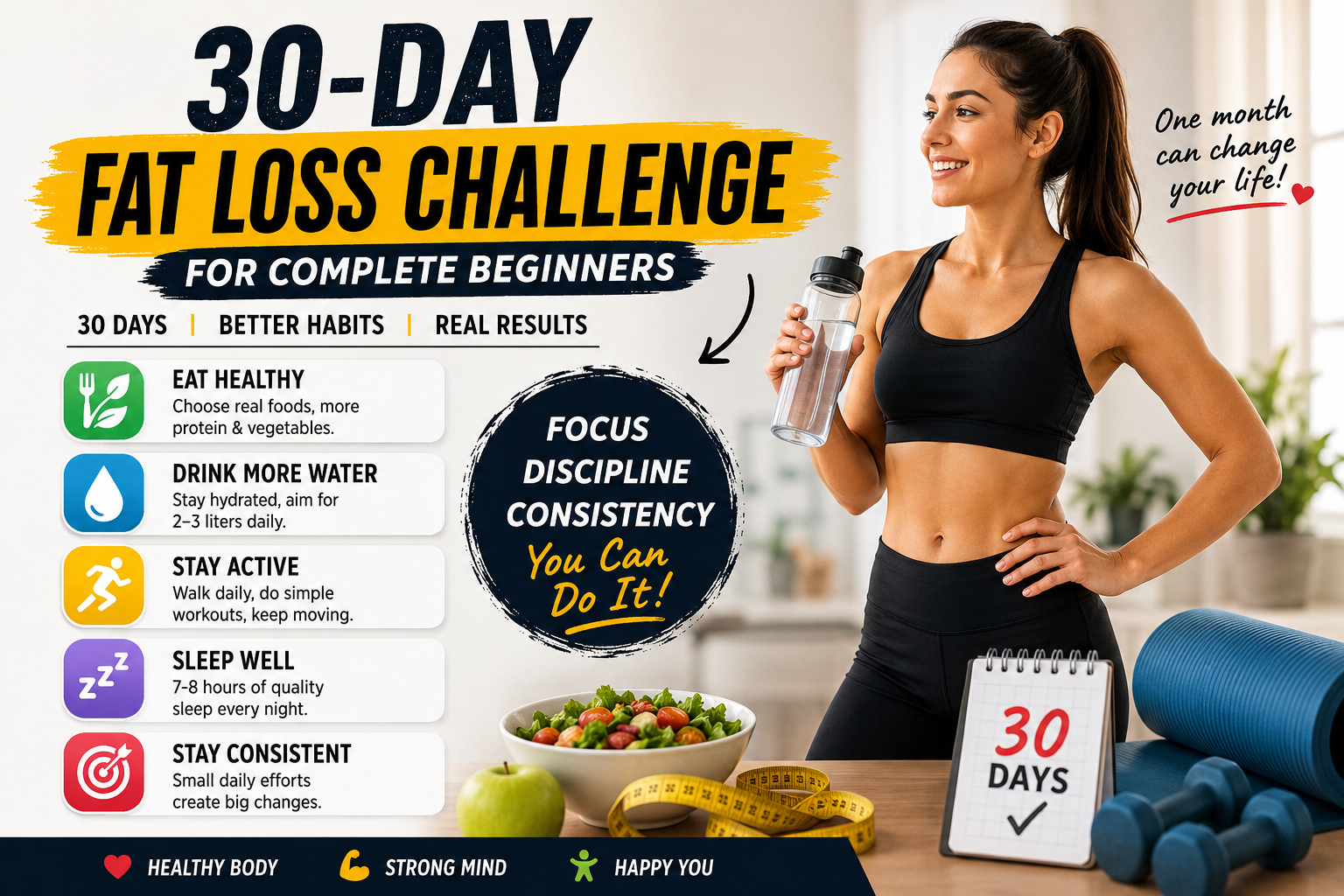
Start by drinking more water.
I used to confuse thirst with hunger. Once I started drinking two to three liters of water daily, I noticed I was eating less without even trying.
Day Two
Go for a twenty minute walk.
Do not worry about speed. Just keep moving.
Walking became my favorite habit because it never felt like punishment.
Day Three
Remove sugary drinks.
Soft drinks, energy drinks, and sugary juices can add hundreds of unnecessary calories.
Replacing them with water made a huge difference.
Day Four
Eat more protein.
I started adding eggs, chicken, fish, yogurt, lentils, and beans to my meals.
Protein helped me stay full for longer and reduced my cravings.
Day Five
Sleep at least seven to eight hours.
I never realized how much poor sleep affected my hunger until I started sleeping properly.
The better I slept, the easier it became to make healthy food choices.
Day Six
Do a beginner bodyweight workout.
Ten squats.
Ten wall push ups.
Ten lunges.
Twenty second plank.
Repeat this circuit three times.
It may look simple, but for a beginner, it works.
Day Seven
Take a rest day.
Rest is just as important as exercise.
Instead of feeling guilty, I used my rest day to stretch and prepare for the next week.
Week Two Improving Nutrition
The second week focuses on making smarter food choices.
I stopped thinking about dieting and started thinking about nourishing my body.
Fill Half Your Plate With Vegetables
Adding vegetables automatically reduced my calorie intake without making me feel hungry.
Colorful vegetables also improved my digestion and energy.
Eat Slowly
I realized I finished meals much faster than my body could recognize fullness.
Eating slowly helped me enjoy food more and eat less.
Avoid Mindless Snacking
Whenever I felt bored, I wanted snacks.
Instead of grabbing chips, I started eating fruit, nuts in moderation, or Greek yogurt.
Continue Walking
Increase your daily walk to thirty minutes.
You do not have to run.
Walking consistently burns calories while being gentle on your joints.
Beginner Strength Training
This week I increased my workout slightly.
Fifteen squats.
Twelve incline push ups.
Twelve lunges on each leg.
Thirty second plank.
Three rounds.
I could already feel myself getting stronger.
Week Three Increasing Activity
By the third week, my body felt more energetic.
Simple movements that once felt difficult became easier.
That motivated me to push a little further.
Increase Daily Steps
Aim for eight thousand to ten thousand steps every day.
I did not always reach ten thousand, but I tried my best.
Every extra step counted.
Try Interval Walking
Walk normally for two minutes.
Walk fast for one minute.
Repeat for thirty minutes.
This simple method increased calorie burn without making me feel exhausted.
Reduce Processed Foods
I started cooking more meals at home.
Homemade food helped me control ingredients and portion sizes.
I still enjoyed my favorite meals occasionally, but I learned balance instead of restriction.
Drink Water Before Meals
This simple trick reduced overeating.
Sometimes I realized I was not hungry at all.
I was simply dehydrated.
Week Four Building a Long Term Lifestyle
The final week is about preparing for life after the challenge.
The goal is not to stop after thirty days.
The goal is to continue living healthier.
Focus on Consistency
Some days I felt motivated.
Some days I did not.
I learned that discipline matters much more than motivation.
Showing up on difficult days builds real progress.
Challenge Yourself
This week I increased my workout again.
Twenty squats.
Fifteen push ups or incline push ups.
Fifteen lunges on each leg.
Forty second plank.
Three to four rounds.
Compared to Day One, I felt much stronger.
Practice Portion Control
I stopped eating until I felt stuffed.
Instead, I ate until I felt comfortably satisfied.
That one habit alone prevented unnecessary overeating.
Celebrate Small Victories
Weight loss is not the only success.
Maybe your clothes fit better.
Maybe you have more energy.
Maybe climbing stairs feels easier.
Celebrate every improvement because each one matters.
Sample Daily Meal Plan
Here is a simple meal plan that helped me stay on track.
Breakfast
Two boiled eggs.
Whole grain toast.
One apple.
Black coffee or green tea without sugar.
Morning Snack
A handful of almonds.
Lunch
Grilled chicken breast.
Brown rice.
Mixed vegetables.
Evening Snack
Greek yogurt with berries.
Dinner
Grilled fish or lentils.
Fresh salad.
Steamed vegetables.
This meal plan kept me full while providing enough protein, fiber, and nutrients.
Beginner Workout Routine
I followed this workout three times every week.
Five minute warm up.
Twenty squats.
Fifteen incline push ups.
Fifteen lunges on each leg.
Fifteen glute bridges.
Forty second plank.
Thirty seconds mountain climbers.
Repeat three rounds.
Finish with stretching.
On the other days, I simply walked or stayed active.
Common Mistakes I Avoided
One mistake was expecting instant results.
Fat loss takes time.
Another mistake was skipping meals.
Skipping meals only made me hungrier later.
I also stopped comparing myself with others.
Everyone has a different starting point.
The most important comparison is between who you were yesterday and who you are today.
I learned not to rely on the weighing scale alone.
Sometimes my weight stayed the same while my waist became smaller.
That showed me my body was changing even if the numbers were not.
Staying Motivated Throughout the Challenge
There were days when I wanted to quit.
Whenever that happened, I reminded myself why I started.
I focused on today’s workout instead of worrying about the next six months.
I kept healthy snacks nearby.
I planned my meals in advance.
I celebrated every completed workout.
Most importantly, I forgave myself whenever I made mistakes.
One unhealthy meal never ruined my progress.
Giving up would have.
What Results Can Beginners Expect
Every person is different.
Some people may lose one to four kilograms during the challenge depending on their starting weight, eating habits, and activity level.
Others may notice better sleep, improved confidence, increased strength, and more energy before seeing major changes on the scale.
The biggest transformation often happens inside your mind.
You begin believing that you are capable of achieving your goals.
That confidence carries into every part of life.
Tips for Continuing After Thirty Days
Once you finish this challenge, do not stop.
Keep walking every day.
Continue strength training three to four times a week.
Eat balanced meals.
Drink enough water.
Sleep well.
Track your progress every month instead of every day.
Most importantly, enjoy the process.
Fat loss should improve your life, not make you miserable.
Final Thoughts
Looking back, I am grateful that I chose a simple and realistic approach instead of chasing quick fixes. These thirty days taught me that lasting fat loss is not about starving yourself or spending hours in the gym. It is about making small choices that you can repeat every single day.
If you are a complete beginner, do not worry about being perfect. Start with one healthy meal, one workout, and one walk. Tomorrow, do it again. Every healthy decision brings you one step closer to your goal.
Your journey does not have to look like anyone else’s. Move at your own pace, celebrate every bit of progress, and stay patient with yourself. Thirty days from now, you will be thankful that you started today. The hardest part is taking the first step, and once you do, you will realize that becoming healthier is one of the best investments you can make in yourself.