Introduction
If there is one thing I have learned about weight loss, it is that there are no magical shortcuts. I spent years trying different diets, skipping meals, buying expensive supplements, and following random advice from social media. Some methods worked for a few days, but the results never lasted. I would lose a little weight and then gain it all back. It was frustrating, and honestly, I started believing that losing weight was impossible.
Everything changed when I stopped looking for quick fixes and started paying attention to what science actually says. Instead of chasing trends, I focused on building healthy habits that I could follow every day. The best part was that these habits did not make me feel deprived or exhausted. They simply became a part of my lifestyle.
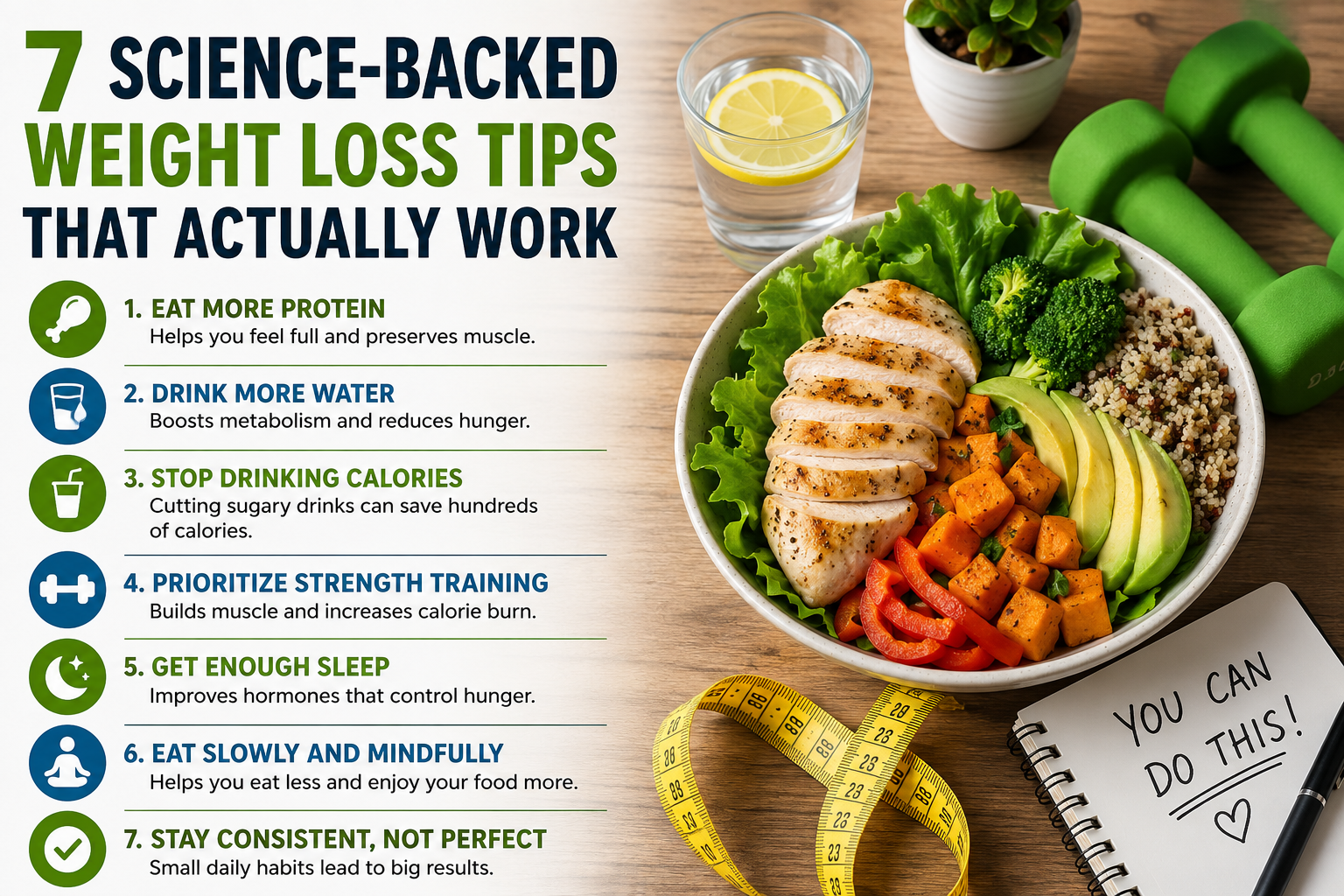
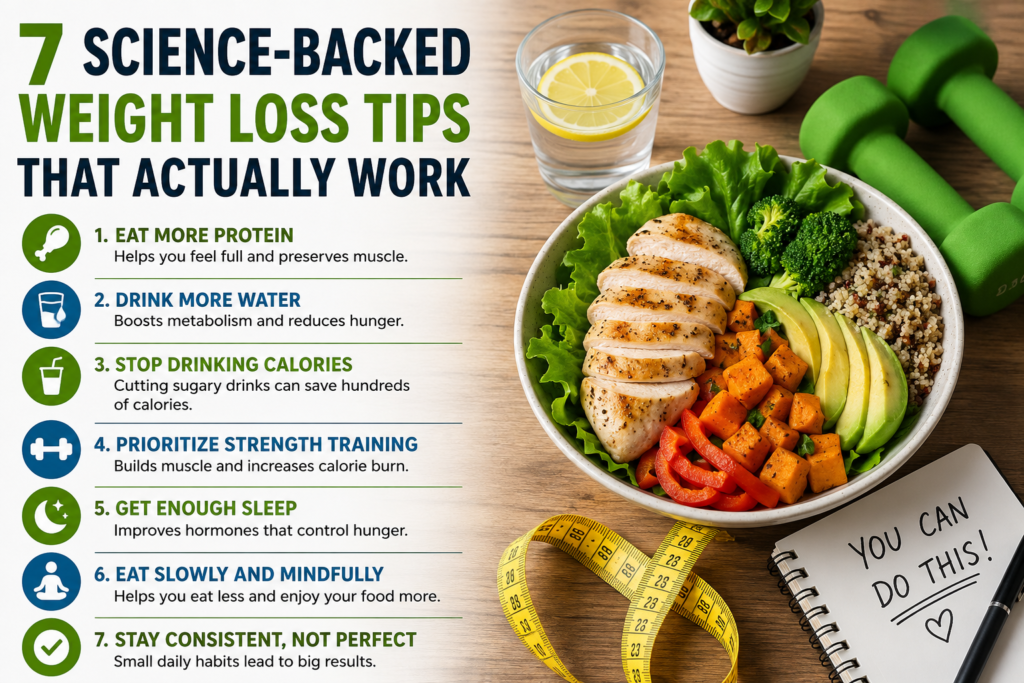
In this article, I want to share seven science backed weight loss tips that truly made a difference for me. These are practical, realistic, and easy to follow. They may seem simple, but they work because they are based on how the human body actually functions.
1. Eat More Protein at Every Meal
One of the biggest changes I made was increasing the amount of protein in my diet. Before that, most of my meals were full of refined carbohydrates that left me feeling hungry again within a short time.
Protein changed everything. It kept me full for longer, reduced unnecessary cravings, and made it easier to avoid unhealthy snacks. I also noticed that I had more energy throughout the day.
Research has consistently shown that protein helps preserve muscle while losing fat. It also requires more energy for digestion compared to carbohydrates and fats, which means your body burns slightly more calories processing it.
Now I try to include a good source of protein in every meal. Sometimes it is eggs for breakfast, grilled chicken for lunch, fish for dinner, or Greek yogurt as a snack. Even simple choices like beans, lentils, and cottage cheese can make a huge difference.
Instead of focusing on eating less, I started focusing on eating better. That simple mindset helped me stay satisfied without constantly thinking about food.
2. Drink More Water Before Meals
This tip sounded too simple when I first heard it, but I was surprised by how effective it was.
Many times we confuse thirst with hunger. I realized that I was reaching for snacks when my body simply needed water.
Now I drink one or two glasses of water about thirty minutes before every meal. This habit naturally helps me eat smaller portions because I already feel partially full before I start eating.
Water also supports digestion, keeps the body hydrated, and plays an important role in metabolism. While drinking water alone will not melt body fat, it supports almost every process involved in healthy weight management.
I also replaced sugary drinks with plain water most of the time. That single change eliminated hundreds of unnecessary calories from my daily routine without making me feel like I was sacrificing anything.
3. Stop Drinking Your Calories
This was probably one of the hardest habits for me to change because I loved soft drinks and sweet coffee.
The problem is that liquid calories do not satisfy hunger the same way solid food does. I could drink a large soda and still feel hungry enough to eat a full meal.
When I finally started checking nutrition labels, I was shocked by how much sugar was hidden in flavored coffees, energy drinks, fruit juices, and soft drinks.
Instead of trying to quit everything overnight, I made gradual changes. I switched to water, black coffee, green tea, and unsweetened beverages. Within a few weeks I noticed that my calorie intake had dropped significantly without feeling hungry.
This small adjustment made a surprisingly big impact on my weight loss journey.
4. Prioritize Strength Training
For a long time I believed that endless cardio was the only way to lose weight.
I spent hours walking and running, but I ignored strength training because I thought lifting weights was only for bodybuilders.
I was completely wrong.
Strength training helped me build lean muscle, and muscle burns more calories than fat even when the body is resting. That means my metabolism gradually became more efficient.
I started with simple bodyweight exercises like squats, push ups, lunges, and planks. As I became stronger, I added dumbbells and resistance bands.
The goal was never to become extremely muscular. I simply wanted a healthier body that could burn calories more efficiently.
Another benefit was that my body looked more toned instead of just becoming smaller. That gave me extra motivation to keep going.
5. Get Enough Quality Sleep
I underestimated sleep for years.
I thought staying up late and waking up early had no connection to weight loss. I could not have been more mistaken.
Whenever I slept less than six hours, I noticed I felt hungrier the next day. I craved sugary foods, fast food, and snacks much more than usual.
Science explains this clearly. Lack of sleep affects hormones that control hunger and fullness. It increases the hormone that makes you feel hungry while reducing the hormone that signals you are full.
Now I aim for seven to nine hours of quality sleep every night. I avoid using my phone before bed, keep my bedroom cool, and maintain a consistent sleep schedule.
Better sleep has improved not only my weight loss but also my mood, energy, and focus throughout the day.
6. Eat Slowly and Mindfully
This was another habit that completely changed my relationship with food.
I used to eat while watching television or scrolling through my phone. Before I even realized it, my plate would be empty, and I still wanted more.
Now I slow down.
I chew my food properly, enjoy every bite, and actually pay attention to how full I feel. It sounds simple, but it gives my brain enough time to recognize when my stomach is satisfied.
Studies have found that people who eat slowly often consume fewer calories because they naturally stop eating before becoming overly full.
Mindful eating also helps reduce emotional eating. Instead of using food to deal with stress or boredom, I started asking myself whether I was truly hungry or simply eating out of habit.
That single question saved me from countless unnecessary snacks.
7. Stay Consistent Instead of Being Perfect
This is probably the most important lesson I have learned.
I used to believe that one unhealthy meal ruined my entire progress. If I ate pizza or dessert, I would think my diet was already broken, so I would continue eating unhealthy for the rest of the week.
Now I understand that weight loss is not about perfection. It is about consistency.
One healthy meal will not make you fit, and one unhealthy meal will not make you overweight. What truly matters is what you do most of the time.
Some days will be easier than others. There will be birthdays, holidays, family dinners, and unexpected situations. Instead of feeling guilty, I simply get back to my healthy routine at the next meal.
That mindset has helped me stay consistent for months instead of giving up after a few days.
Final Thoughts
Looking back, I realize that successful weight loss is not about following the latest trend or buying expensive products. It is about building habits that you can maintain for the rest of your life.
Eating more protein, drinking enough water, avoiding sugary drinks, strength training, getting quality sleep, eating mindfully, and staying consistent may not sound exciting, but they are backed by science because they actually work.
My journey was not perfect, and I still have days when I make unhealthy choices. The difference is that I no longer let those moments define my progress. I focus on making better decisions most of the time, and those small daily improvements have added up to big results.
If you are starting your own weight loss journey, remember that patience is just as important as effort. Real transformation does not happen overnight, but every healthy choice brings you one step closer to your goal. Trust the process, stay committed, and give your body the time it needs. The results will come, and they will be worth every bit of consistency you put into the journey.