Introduction
A few years ago, I used to believe that stretching was only for athletes or people who spent hours in the gym. My daily routine was simple. I would wake up, rush to work, sit in front of a computer for long hours, and then come back home feeling tired. Almost every evening I noticed stiffness in my neck, lower back, and shoulders. At first, I ignored it because I thought it was just a normal part of getting older. But when the discomfort became part of my everyday life, I knew I had to make a change.
Instead of looking for complicated workouts, I started spending just ten to fifteen minutes every morning doing a few simple stretches. I honestly did not expect much in the beginning. However, after a couple of weeks, I felt lighter, more energetic, and surprisingly free from many of the small aches that had become part of my routine.
Today, stretching is something I never skip. It keeps my body moving comfortably and helps me stay active throughout the day. If you also experience tight muscles, stiffness, or occasional body pain, these five daily stretches may help you just as much as they helped me.
Why Stretching Matters Every Day
One thing I have learned is that flexibility is not just about touching your toes. It is about allowing your body to move naturally without discomfort. When muscles become tight, they pull on joints and limit movement. Over time, this can cause pain in different areas of the body.
Daily stretching increases blood flow to muscles, improves posture, reduces muscle tension, and supports better movement. It also helps your body recover after long hours of sitting, walking, or exercising.
The best part is that you do not need expensive equipment or a gym membership. All you need is a little space and a few minutes every day.
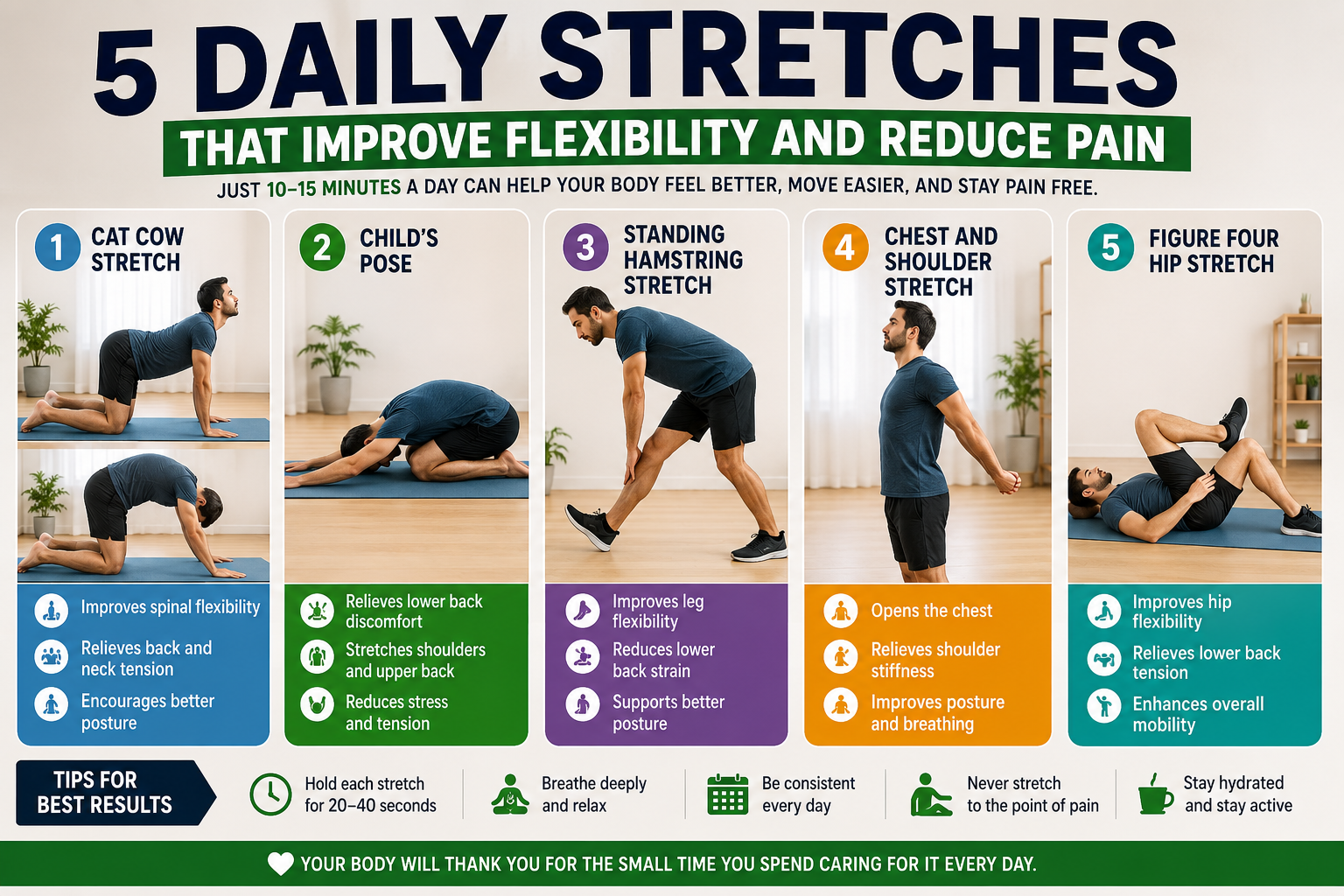
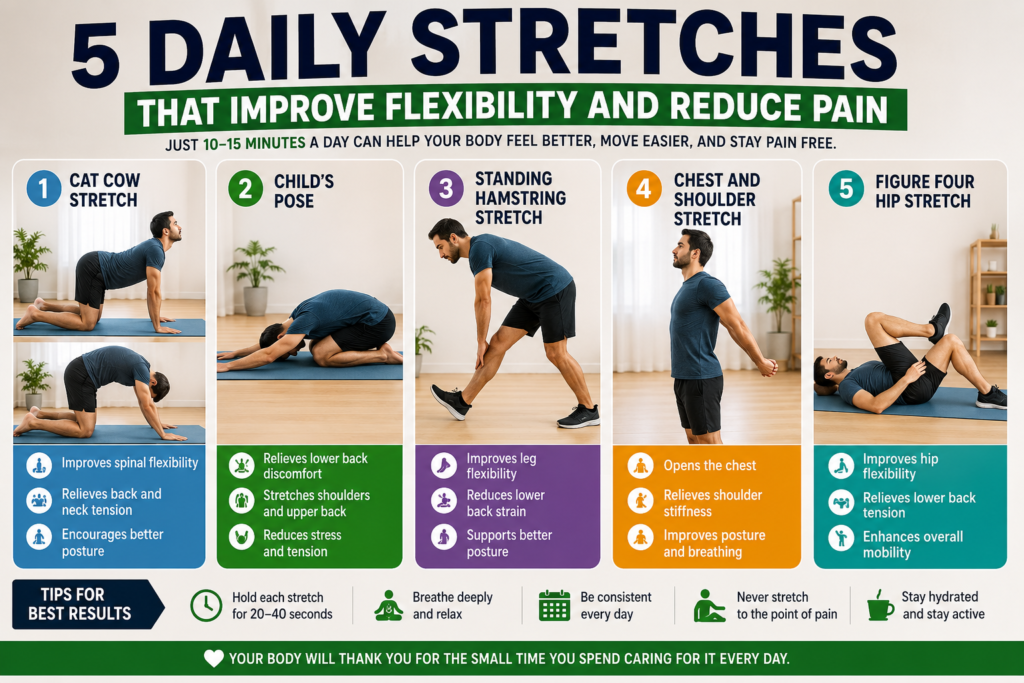
1. Cat Cow Stretch
The Cat Cow Stretch became my favorite because it wakes up my spine every morning. Whenever I spend long hours sitting, my back feels stiff. This stretch gently loosens the entire spine and improves mobility.
To perform this stretch, start on your hands and knees. Keep your hands directly below your shoulders and your knees under your hips. Slowly arch your back while lifting your head and chest toward the ceiling. Then gently round your back while lowering your head and pulling your stomach inward.
Move slowly with your breathing. Inhale while arching your back and exhale while rounding it.
I usually repeat this movement ten to fifteen times. Every time I finish, my back feels more relaxed and flexible.
Benefits
Improves spinal flexibility
Relieves lower back stiffness
Reduces neck tension
Encourages better posture
Helps warm up the entire body
2. Child’s Pose
Whenever my lower back feels tight or my shoulders are sore after working on my computer, I always spend a few minutes in Child’s Pose. It is one of the most relaxing stretches I know.
Begin by kneeling on the floor. Sit back on your heels and slowly stretch your arms forward while lowering your chest toward the ground. Rest your forehead comfortably on the floor and breathe deeply.
Instead of forcing the stretch, simply relax into the position. I usually stay here for thirty to sixty seconds while taking slow, deep breaths.
This stretch not only relaxes my muscles but also helps clear my mind after a stressful day.
Benefits
Relieves lower back discomfort
Stretches shoulders and upper back
Reduces stress and tension
Improves flexibility in the hips
Encourages deep breathing
3. Standing Hamstring Stretch
I never realized how tight my hamstrings were until I started stretching them regularly. Tight hamstrings can affect your lower back, hips, and even your walking posture.
To perform this stretch, stand with one foot slightly in front of the other. Keep the front leg straight and gently bend the back knee. Slowly lean your body forward from your hips while keeping your back straight.
You should feel a gentle stretch along the back of your thigh. Hold the position for about thirty seconds before switching sides.
One mistake I made at the beginning was trying to reach my toes immediately. Over time, I learned that stretching should never be painful. The goal is gradual improvement, not forcing your body.
Benefits
Improves flexibility in the legs
Reduces lower back strain
Supports better posture
Helps prevent muscle tightness
Improves movement during daily activities
4. Chest and Shoulder Stretch
Modern life often causes rounded shoulders because many of us spend hours looking at computers, phones, or tablets. I noticed that my shoulders always felt tight until I added this simple stretch to my daily routine.
Stand tall and clasp your hands behind your back. Gently straighten your arms and slowly lift your hands while opening your chest.
Keep your shoulders relaxed instead of lifting them toward your ears. Hold this position for twenty to thirty seconds while breathing naturally.
Every time I finish this stretch, I immediately notice that I stand taller and breathe more comfortably.
Benefits
Opens the chest
Relieves shoulder stiffness
Improves posture
Reduces neck tension
Increases upper body flexibility
5. Figure Four Hip Stretch
I spend a lot of time sitting, and my hips used to become extremely tight. This stretch has helped me improve hip mobility more than any other exercise.
Lie on your back with both knees bent. Cross one ankle over the opposite knee, creating the shape of the number four. Slowly pull the supporting leg toward your chest until you feel a gentle stretch in your hip.
Hold for thirty to forty seconds before changing sides.
This stretch may feel slightly uncomfortable at first if your hips are tight, but with regular practice it becomes much easier.
Benefits
Improves hip flexibility
Relieves lower back tension
Reduces stiffness from sitting
Supports better walking and movement
Helps improve overall mobility
How Long Should You Stretch?
When I first started, I thought longer stretching sessions would produce faster results. I quickly realized that consistency matters much more than duration.
Now I spend around ten to fifteen minutes every morning. I hold each stretch between twenty and forty seconds and repeat it when necessary.
Even on busy days, I try not to skip my routine because I always notice the difference when I do.
Common Stretching Mistakes I Learned to Avoid
During my first few weeks, I made several mistakes that reduced the benefits of stretching.
The biggest mistake was rushing through every movement. Stretching should always be slow and controlled.
Another mistake was bouncing while trying to stretch deeper. This actually increases the risk of muscle injury instead of improving flexibility.
I also learned not to hold my breath. Deep breathing helps muscles relax, allowing a more comfortable stretch.
Finally, I stopped comparing myself with others. Everyone has different levels of flexibility, and progress takes time.
Tips That Helped Me Stay Consistent
Building a stretching habit became much easier after making a few simple changes.
I stretch immediately after waking up because it helps loosen my body before the day begins.
Sometimes I play relaxing music to make the routine more enjoyable.
I keep a yoga mat ready so I never have an excuse to skip.
I focus on how good I feel afterward instead of thinking about the few minutes it takes.
Most importantly, I remind myself that small daily improvements are better than occasional long workouts.
Other Ways to Improve Flexibility Naturally
Stretching works even better when combined with other healthy habits.
Drinking enough water helps muscles stay healthy.
Regular walking keeps joints active throughout the day.
Strength training improves overall movement by supporting muscles around the joints.
Eating foods rich in protein, healthy fats, vitamins, and minerals supports muscle recovery.
Getting enough sleep allows the body to repair itself overnight.
These simple habits work together to improve flexibility and reduce pain over time.
When You Should Be Careful
Stretching should never cause sharp or intense pain. If you feel sudden pain, stop immediately.
People recovering from injuries or surgeries should always ask their healthcare provider before beginning a new stretching routine.
If you have chronic joint conditions or severe back pain, working with a qualified physical therapist can help you choose stretches that are safe for your condition.
My Personal Results After Daily Stretching
Looking back, I am genuinely surprised by how much difference ten minutes of stretching has made in my daily life.
My lower back no longer feels stiff after sitting for long periods. My shoulders stay relaxed even after working on my computer. Walking feels smoother, and I notice that my posture has improved naturally.
One unexpected benefit was better sleep. Since my muscles are more relaxed at night, I wake up feeling refreshed instead of sore.
The biggest lesson I learned is that flexibility is something anyone can improve with patience and consistency. You do not need to be naturally flexible. You simply need to show up every day.
Conclusion
If someone had told me years ago that a few simple stretches could reduce pain and improve the way I feel every day, I probably would not have believed them. After experiencing the benefits myself, I now understand why stretching is recommended by fitness experts around the world.
The Cat Cow Stretch, Child’s Pose, Standing Hamstring Stretch, Chest and Shoulder Stretch, and Figure Four Hip Stretch have become part of my daily routine because they help my body stay flexible, comfortable, and ready for whatever the day brings.
You do not need hours of exercise to start feeling better. Just ten to fifteen minutes of gentle stretching each day can gradually improve flexibility, reduce muscle tension, and make everyday movements easier. Stay patient, listen to your body, and enjoy the small improvements that add up over time. Your future self will definitely thank you.