Introduction
When I first started focusing on building muscle, I made the same mistake that many beginners make. I thought lifting heavier weights was all that mattered. I spent hours in the gym, pushed myself through intense workouts, and expected my muscles to grow quickly. After a few months, I realized something was missing. My strength was improving, but my body was not changing the way I wanted.
That was the moment I started paying serious attention to nutrition, especially protein. Once I learned how important protein is for muscle recovery and growth, everything changed. My workouts became more productive, I recovered faster, and I finally started seeing noticeable muscle gains.
In 2026, building muscle is not about following extreme diets or buying expensive supplements. The biggest difference comes from eating the right high protein foods consistently. Whether your goal is to gain lean muscle, improve strength, or simply become healthier, choosing quality protein sources can completely transform your results.
In this article, I am sharing the best high protein foods that have worked for me and continue to be recommended by fitness experts. These foods are easy to find, delicious, and perfect for supporting muscle growth naturally.
Why Protein Matters for Muscle Growth
Every workout creates tiny tears in your muscle fibers. That might sound bad, but it is actually how muscles grow. Your body repairs those fibers using amino acids from protein. During this repair process, the muscles become stronger and slightly bigger.
Without enough protein, your body cannot recover properly. You may feel tired for longer, your workouts may suffer, and muscle growth can slow down significantly.
I noticed that after increasing my daily protein intake, I was less sore after training and had much better energy throughout the week. Recovery became easier, and I looked forward to every workout instead of feeling exhausted.
How Much Protein Do You Really Need
One question I hear all the time is how much protein someone should eat.
While everyone’s needs are different, most people trying to build muscle benefit from eating around 1.6 to 2.2 grams of protein per kilogram of body weight each day.
Instead of trying to eat all your protein in one meal, it works much better to spread it throughout the day. I usually divide my protein into breakfast, lunch, dinner, and one or two healthy snacks.
This keeps my energy stable and gives my muscles a steady supply of nutrients.
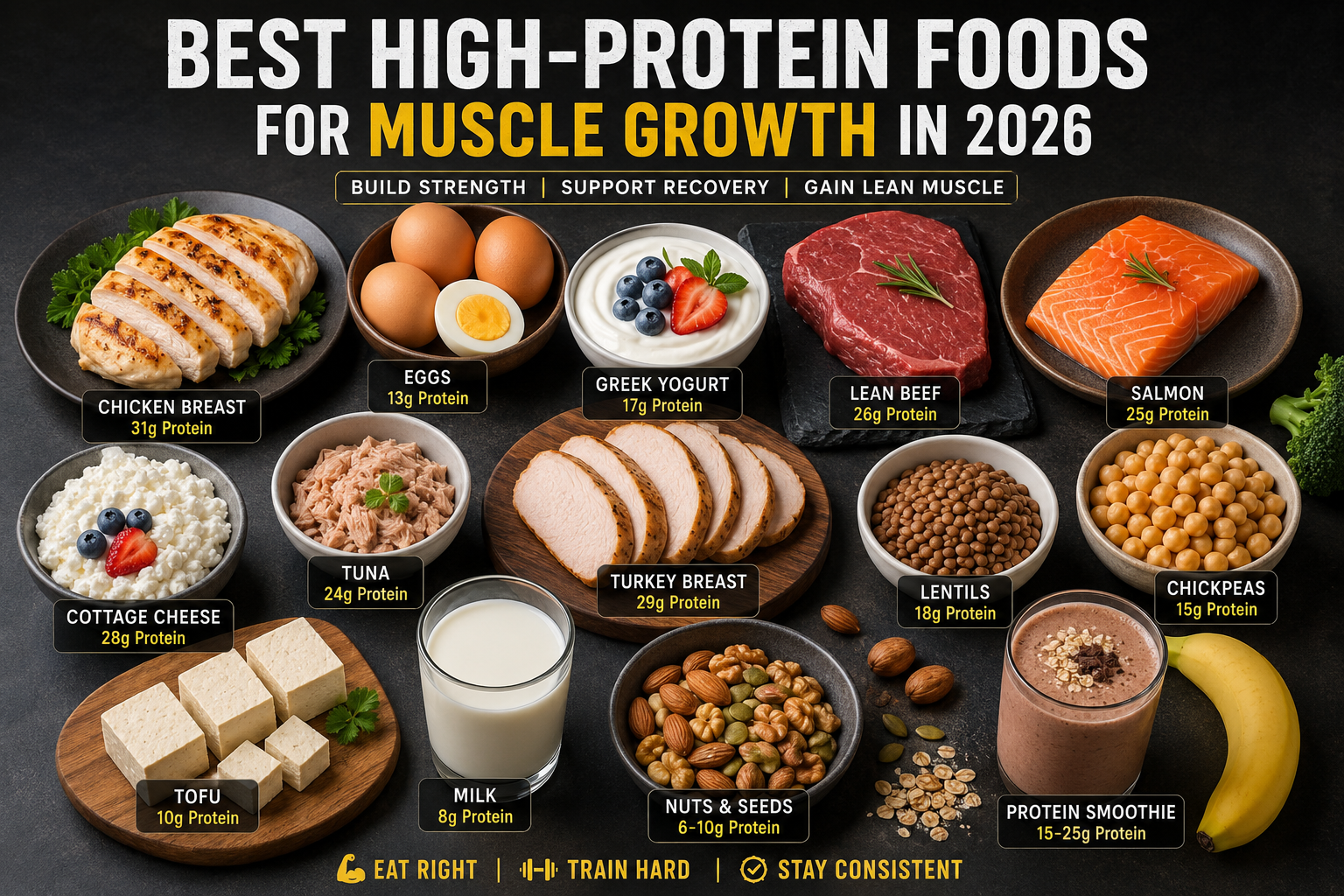
Chicken Breast
Chicken breast has been my favorite muscle building food for years.
It is lean, affordable, easy to cook, and packed with high quality protein. A single serving provides plenty of protein without too much fat, making it ideal for anyone trying to build lean muscle.
I enjoy grilled chicken with rice and vegetables after a workout because it fills me up without making me feel heavy.
Chicken also works well in salads, sandwiches, wraps, and homemade meal prep containers.
Eggs
Eggs are one of the most complete protein sources available.
They contain every essential amino acid your muscles need for recovery and growth. The yolk also provides healthy fats, vitamins, and important nutrients that support overall health.
Many people avoid egg yolks, but unless your doctor recommends otherwise, eating whole eggs can be part of a balanced diet.
I often start my day with scrambled eggs and whole grain toast because it keeps me full for hours and gives me enough energy for morning workouts.
Greek Yogurt
Greek yogurt is one of the easiest ways to increase protein intake without much effort.
It contains more protein than regular yogurt while also providing calcium and probiotics that support digestion.
I like mixing Greek yogurt with berries, nuts, and a little honey. It tastes like dessert while helping me stay on track with my fitness goals.
It also makes an excellent evening snack because the slow digesting protein helps support muscle recovery overnight.
Lean Beef
Lean beef is another excellent food for muscle growth.
Besides protein, it provides iron, zinc, vitamin B12, and creatine, which all support strength and energy production.
I do not eat beef every day, but including it once or twice a week has been a great way to add variety to my meals.
Choosing lean cuts helps keep saturated fat lower while still providing plenty of nutrition.
Salmon
Salmon is one of the healthiest protein sources available.
Not only is it rich in protein, but it also contains omega 3 fatty acids that help reduce inflammation and support recovery after hard workouts.
Whenever I have a particularly intense training session, I enjoy grilled salmon with sweet potatoes and vegetables. It feels like a complete recovery meal.
The healthy fats also support brain function and heart health, making salmon a smart choice for overall wellness.
Cottage Cheese
Cottage cheese is often overlooked, but it deserves much more attention.
It contains casein protein, which digests slowly and provides your muscles with amino acids over several hours.
I sometimes eat cottage cheese before bed because it keeps me satisfied and supports overnight muscle repair.
Adding fruit, cinnamon, or chopped nuts makes it even more enjoyable.
Tuna
Tuna is affordable, convenient, and loaded with protein.
Canned tuna has saved me many times when I needed a quick meal but did not have time to cook.
Mixing tuna with Greek yogurt instead of mayonnaise creates a healthier sandwich filling that is both delicious and filling.
Fresh tuna steaks are also a fantastic option for anyone looking to increase protein intake.
Turkey Breast
Turkey breast is another lean protein that deserves a place in any muscle building diet.
It is similar to chicken but offers a slightly different flavor, which helps prevent meal boredom.
I enjoy sliced turkey in wraps, sandwiches, or homemade rice bowls.
Changing protein sources throughout the week keeps meals exciting while providing different vitamins and minerals.
Lentils
Not everyone wants to rely only on animal protein, and lentils are one of my favorite plant based choices.
They provide protein, fiber, iron, and complex carbohydrates that support long lasting energy.
Lentil soup has become one of my favorite healthy meals during colder months.
Even if you eat meat regularly, adding lentils to your diet increases fiber and improves overall nutrition.
Chickpeas
Chickpeas are another fantastic plant based protein source.
They can be roasted as a crunchy snack, blended into hummus, or added to salads and rice bowls.
Whenever I want something different from chicken or eggs, chickpeas are an easy option that still supports my protein goals.
Their fiber content also helps keep hunger under control.
Tofu
Tofu has improved significantly over the years, and many people are surprised by how versatile it has become.
When cooked properly with herbs and spices, tofu absorbs flavors beautifully.
It provides high quality plant protein while remaining low in calories.
Even though I am not vegetarian, I occasionally include tofu in stir fries because it adds variety to my weekly meals.
Milk
Milk is often underestimated in the fitness world.
It contains both whey and casein protein, making it an excellent recovery drink.
A glass of milk after training can provide protein, carbohydrates, calcium, and hydration at the same time.
I often blend milk with bananas, oats, and peanut butter to make a simple homemade muscle building shake.
Protein Rich Nuts and Seeds
Almonds, walnuts, pumpkin seeds, chia seeds, and sunflower seeds all provide extra protein along with healthy fats.
Although they should not be your primary protein source, they make excellent snacks between meals.
I usually carry a small container of mixed nuts whenever I travel because they help prevent unhealthy snacking.
Protein Smoothies
There are days when eating a full meal immediately after training is difficult.
On those days, I prepare a smoothie using milk, Greek yogurt, oats, banana, peanut butter, and sometimes a scoop of protein powder.
It is quick, nutritious, and helps begin the recovery process without requiring much preparation.
Whole foods should always be the priority, but smoothies are a convenient backup.
Foods I Combine for Better Results
One lesson I learned over time is that combining protein with healthy carbohydrates gives much better workout recovery.
Some of my favorite combinations include grilled chicken with brown rice, salmon with sweet potatoes, eggs with oatmeal, Greek yogurt with fruit, and lean beef with quinoa.
These meals provide balanced nutrition while keeping me energized throughout the day.
Common Protein Mistakes
Many people make the mistake of relying entirely on supplements while ignoring whole foods.
Protein powders can be useful, but they should never replace a balanced diet.
Another mistake is skipping breakfast or eating very little protein until dinner.
Your muscles need consistent nutrition throughout the day, not just one large serving at night.
Finally, many people forget about hydration. Drinking enough water helps your body digest nutrients more efficiently and supports overall performance.
My Daily High Protein Routine
My day usually starts with eggs or Greek yogurt for breakfast.
Lunch often includes grilled chicken with rice and vegetables.
In the afternoon, I snack on fruit with nuts or cottage cheese.
Dinner is usually salmon, lean beef, or turkey with potatoes or whole grains.
Before bed, I sometimes have Greek yogurt or cottage cheese to support overnight recovery.
This routine keeps my protein intake steady without making meals feel repetitive.
Final Thoughts
Building muscle in 2026 is much simpler than many people think. You do not need expensive supplements or complicated meal plans. What matters most is consistently eating enough high quality protein while training regularly and allowing your body enough time to recover.
From my own experience, focusing on whole foods completely changed my fitness journey. Chicken, eggs, Greek yogurt, salmon, lean beef, lentils, tofu, cottage cheese, tuna, and other protein rich foods helped me build strength while improving my overall health.
Remember that muscle growth does not happen overnight. Stay patient, remain consistent, and make protein a priority in every meal. Small daily habits eventually lead to impressive long term results.
If you combine these high protein foods with progressive strength training, quality sleep, and proper hydration, you will give your body everything it needs to build lean muscle naturally and maintain those results for years to come.