My Personal Experience With Stress and Fitness
When I started my fitness journey, I believed that exercise and a good diet were the only things that mattered. I thought if I trained hard, ate healthy food, and stayed consistent, my body would automatically change. But after some time, I realized there was another important factor that I had ignored completely, and that was stress.
There were periods when I was working hard in the gym, following my meals properly, and still not seeing the progress I expected. My energy levels were low, my motivation was disappearing, and my body was not responding the way I wanted. Later, I understood that stress was silently affecting my weight, recovery, and overall fitness progress.
Stress is something almost everyone experiences. Whether it comes from work, studies, family responsibilities, financial pressure, or personal struggles, it can have a powerful impact on our body. Many people focus only on workouts and calories but forget that mental health plays a huge role in physical transformation.
Understanding How Stress Works Inside the Body
Stress is the body’s natural response to challenging situations. When we feel pressure or danger, our body releases hormones that prepare us to react. One of the main hormones involved in this process is cortisol, which is often called the stress hormone.
In short periods, stress can actually be helpful. It can increase focus, improve alertness, and give us the energy to handle difficult situations. However, when stress becomes constant, it can create problems inside the body.
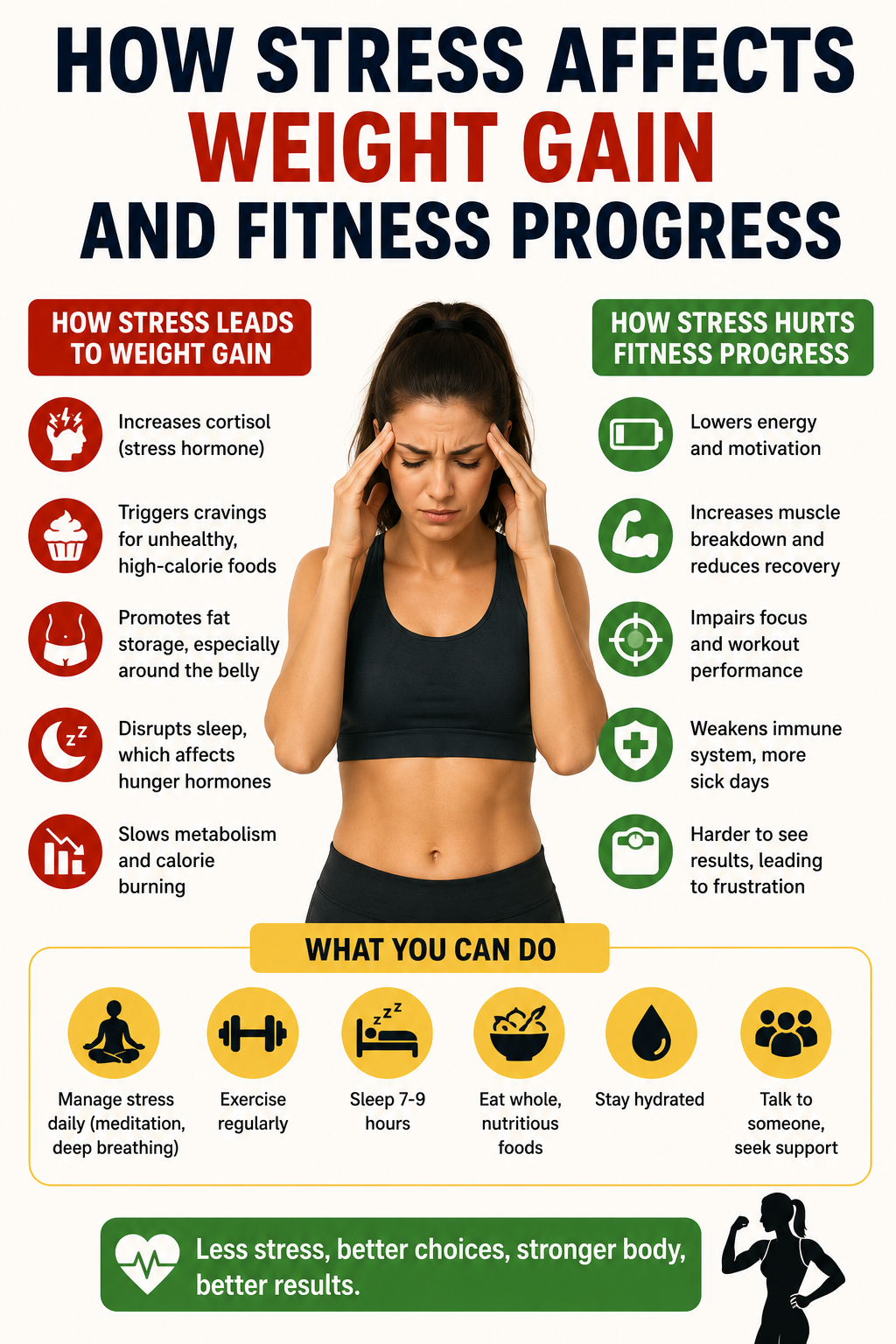
Long term stress keeps cortisol levels higher than normal. This can affect hunger, sleep, metabolism, muscle recovery, and fat storage. This is one of the reasons why some people gain weight even when they feel they are not eating much more than usual.
I personally noticed that during stressful times, my body felt different. I was more tired, my workouts felt harder, and my cravings increased. It showed me that fitness is not only about what happens in the gym. It is also about what happens in the mind.
Why Stress Can Lead to Weight Gain
One of the biggest ways stress affects weight is through increased cravings. When the body is under pressure, many people naturally look for foods that provide quick comfort and energy. These foods are usually high in sugar, unhealthy fats, and calories.
During stressful days, I noticed that I wanted sweet snacks and fast food more often than usual. It was not because I was truly hungry. It was because my mind was searching for something that could provide temporary relief.
Stress can also affect the hormones that control hunger. Cortisol can increase appetite and make it harder to feel satisfied after eating. This can lead to overeating without even realizing it.
Another problem is emotional eating. Many people use food as a way to deal with emotions like frustration, sadness, boredom, or anxiety. Instead of eating because the body needs fuel, they eat because the mind wants comfort.
Over time, these small habits can contribute to unwanted weight gain.
The Connection Between Stress and Belly Fat
One of the most common concerns related to stress is increased belly fat. High levels of cortisol are linked with greater fat storage around the abdominal area.
When the body experiences constant stress, it believes it needs extra energy to survive. As a result, it can store more fat as a protective mechanism.
I noticed that when my stress levels were high, losing belly fat became much harder. Even with regular exercise, my progress was slower compared to periods when I was relaxed and sleeping well.
This does not mean stress automatically causes weight gain for everyone. Many factors like genetics, diet, activity level, and lifestyle choices also matter. But managing stress can make the journey toward a healthier body much easier.
How Stress Reduces Workout Performance
When I first started training, I thought motivation was the only thing needed to complete workouts. But stress taught me that energy and recovery are equally important.
During stressful periods, workouts can feel more difficult. You may feel tired before you even begin exercising. Your strength may decrease, and your ability to push yourself can become limited.
Stress can also affect concentration. A distracted mind makes it harder to focus on proper form and intensity during exercise. This can reduce the quality of your training sessions.
I experienced days when I entered the gym but could not perform at my normal level. My body was physically present, but my mind was exhausted. This made me realize that fitness progress depends on both physical and mental preparation.
Stress and Muscle Recovery
Building muscle does not happen only during workouts. It happens when the body recovers after training. Sleep, nutrition, and stress management are important parts of this recovery process.
When stress levels are high, the body may struggle to repair muscles effectively. Elevated cortisol can interfere with muscle growth and increase muscle breakdown.
I noticed that whenever I was stressed and sleeping poorly, my body felt sore for longer periods. My muscles needed more time to recover, and my progress slowed down.
A good workout routine is important, but without proper recovery, results can become difficult to achieve. Taking care of your mental health is just as important as lifting weights or doing cardio.
The Impact of Stress on Sleep and Fitness
Sleep is one of the most important parts of fitness, but stress often damages sleep quality. Many people experience racing thoughts at night, difficulty falling asleep, or waking up feeling tired.
Poor sleep affects hormones that control hunger and recovery. When you do not sleep well, you may feel more cravings, lower energy, and less motivation to exercise.
I learned that a few nights of bad sleep could completely change how I felt during workouts. My strength was lower, my mood was different, and staying consistent became more challenging.
Improving sleep quality helped me control stress and made my fitness journey much easier.
Simple Ways I Manage Stress While Staying Fit
Over time, I learned that managing stress does not require complicated methods. Small daily habits can create a big difference.
One thing that helped me was walking. A simple walk outside allowed my mind to relax and helped me clear negative thoughts. It became a peaceful activity that supported both my mental and physical health.
I also started focusing more on proper breathing. Deep breathing exercises helped me calm my mind during stressful moments.
Another important habit was planning my workouts realistically. Earlier, I believed I needed to train extremely hard every day. Later, I understood that consistency is more important than perfection.
I also paid more attention to sleep, hydration, and spending time away from screens. These small changes improved my energy and helped me stay focused on my goals.
Finding Balance Between Fitness and Mental Health
A common mistake many people make is becoming too focused on physical results while ignoring mental well being. Fitness should improve your life, not create more pressure.
There were times when I became frustrated because my progress was slower than expected. But I learned that every person’s journey is different. Some weeks bring great results, while others are about maintaining habits and staying patient.
A healthy lifestyle is not only about losing weight or gaining muscle. It is about creating a balance where your body and mind work together.
When stress is controlled, workouts become more enjoyable, food choices become easier, and progress becomes more consistent.
Final Thoughts From My Fitness Journey
Looking back, I realize that stress was one of the biggest factors affecting my fitness progress. I used to think only about exercise and nutrition, but now I understand the importance of mental health as well.
Stress can increase cravings, affect hormones, reduce workout performance, slow muscle recovery, and make weight management more difficult. But the good news is that stress can be managed through simple lifestyle changes.
My biggest lesson has been that fitness is not just a physical challenge. It is a complete journey involving the body, mind, and daily habits.
If you want better results, do not only train harder. Also learn to relax, recover, and take care of yourself. A calm mind can help create a stronger body, and true fitness comes when both are working together.