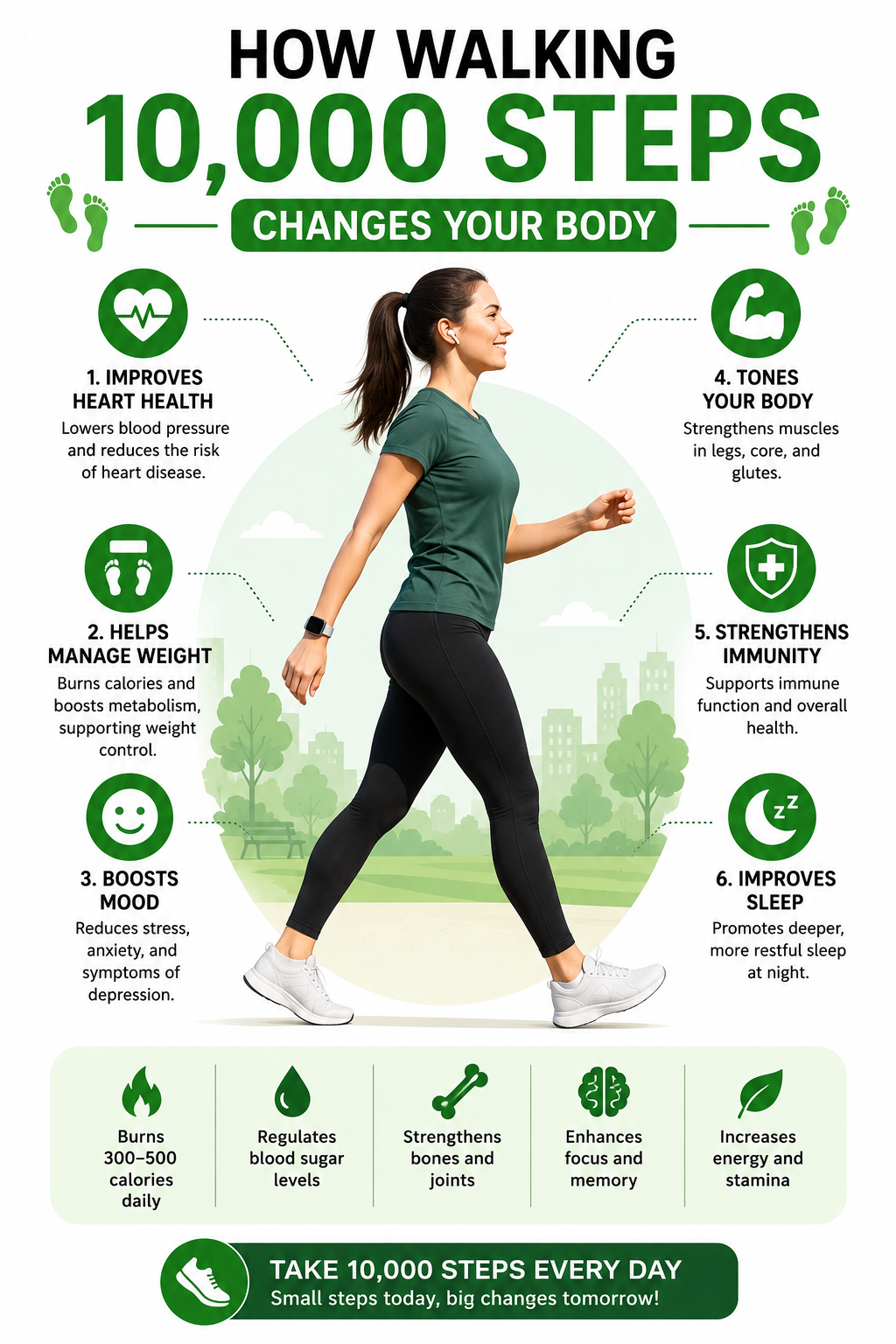
For a long time, I believed that getting fit meant spending hours in the gym, lifting heavy weights, or following complicated workout plans. Every time I tried one of those routines, I eventually gave up because they felt too difficult to maintain. Then I decided to make one simple change. I started walking every day with the goal of reaching 10,000 steps.
At first, I honestly did not expect much. Walking seemed too easy to make a real difference. But after a few weeks, I noticed changes that surprised me. My energy improved, I felt lighter, my mood became more positive, and even my sleep quality started getting better. That experience completely changed the way I look at fitness.
Walking 10,000 steps every day is not a magical number that instantly transforms your body, but it creates a healthy routine that can improve almost every part of your life. It is one of the safest, easiest, and most affordable forms of exercise that almost anyone can do.
Why 10,000 Steps Became So Popular
Many people think that science discovered the perfect number of daily steps, but the truth is a little different. The idea of walking 10,000 steps became popular decades ago through a Japanese marketing campaign. Since then, researchers have found that walking more each day provides many health benefits, even if you do not always reach exactly 10,000 steps.
For me, the number simply became a daily goal. Some days I walked more, and some days I walked less. The important thing was staying consistent instead of chasing perfection.
Your Heart Becomes Stronger
One of the first changes I noticed was that climbing stairs became much easier. Before walking regularly, I often felt slightly out of breath after carrying groceries or walking uphill. After several weeks of daily walking, those activities felt much easier.
Walking strengthens your heart because it increases your heart rate in a gentle and controlled way. Over time, your heart becomes more efficient at pumping blood throughout your body.
A stronger heart means better circulation, improved oxygen delivery, and lower risk of heart disease. Even a simple daily walk can have a major impact when repeated consistently for months and years.
Your Body Starts Burning More Calories
Walking may not burn calories as quickly as running, but the total calories burned over time can be impressive.
When I first started walking 10,000 steps, I was surprised by how much movement I had added to my day without feeling exhausted. Instead of sitting all day, I was constantly moving, and those extra calories began adding up.
The exact number depends on your weight, walking speed, and terrain, but many people burn between 300 and 500 calories by walking 10,000 steps.
Combined with healthy eating, this can support gradual and sustainable fat loss.
Weight Loss Becomes More Manageable
I used to think losing weight required intense workouts every day. Walking taught me that consistency often matters more than intensity.
Because walking is gentle on the body, it is much easier to stick with for months. Unlike difficult workouts that leave you sore and exhausted, walking feels refreshing.
As the weeks passed, I noticed my clothes fitting better even before I saw major changes on the scale. My waist slowly became smaller, and I felt less bloated throughout the day.
Walking creates a calorie deficit without putting excessive stress on your body, making weight management much more realistic.
Your Muscles Become More Active
Although walking is not considered a muscle building exercise, it still activates many muscles throughout your body.
Your legs work continuously with every step. Your calves help push you forward. Your thighs stabilize your movement. Your glutes help generate power with every stride.
Even your core stays engaged to maintain balance and proper posture.
After several weeks, I noticed my legs felt stronger during everyday activities. Standing for longer periods became easier, and I experienced less fatigue.
Your Joints Feel Better
Many people avoid exercise because they worry about joint pain. Surprisingly, regular walking can actually help protect your joints.
Movement increases blood flow around the joints while helping lubricate them naturally. Walking also strengthens the muscles that support your knees and hips.
When I spent too many days sitting, my body felt stiff. Once I developed the habit of daily walking, that stiffness gradually disappeared.
Of course, proper shoes and good walking posture also make a big difference.
Your Mood Improves Naturally
This was probably the biggest surprise for me.
Whenever I felt stressed, anxious, or mentally exhausted, going for a walk almost always helped clear my mind.
Walking encourages the release of endorphins, which are chemicals that improve mood and reduce stress. Spending time outdoors also provides fresh air, sunlight, and a mental break from screens.
Some of my best ideas came while walking instead of sitting at my desk trying to force myself to think.
Walking became more than physical exercise. It became a form of mental therapy.
Your Energy Levels Increase
It sounds strange that using more energy actually gives you more energy, but that is exactly what happened.
Before I started walking regularly, I often felt tired in the afternoon. I depended on coffee to stay productive.
After building a consistent walking routine, I noticed my energy remained more stable throughout the day.
Regular movement improves blood circulation, allowing oxygen and nutrients to reach your muscles and brain more efficiently.
Instead of feeling drained after work, I still had enough energy to enjoy the evening.
Your Sleep Gets Better
Quality sleep affects every part of health.
After several weeks of daily walking, I noticed I fell asleep faster and woke up feeling more refreshed.
Physical activity helps regulate your body’s natural sleep cycle. Walking also reduces stress, which makes it easier to relax at night.
I found that afternoon or early evening walks worked especially well because they helped me release the stress that built up during the day.
Better sleep also improved my concentration, mood, and recovery.
Your Blood Sugar Becomes More Stable
Walking after meals became one of the healthiest habits I developed.
A short walk after eating helps your muscles use glucose from your bloodstream more efficiently. This can reduce sudden spikes in blood sugar.
Many health professionals recommend walking for even 10 to 20 minutes after meals because it supports healthy metabolism.
It is a small habit that can produce meaningful long term benefits.
Your Posture Improves
Most of us spend hours sitting in front of computers or looking down at our phones.
I noticed that regular walking reminded me to stand taller. Keeping my shoulders relaxed and looking forward gradually improved my posture.
Walking strengthens the muscles responsible for supporting your spine while encouraging better body alignment.
Over time, I experienced fewer aches in my neck and lower back.
Your Lungs Become More Efficient
As your fitness improves, your breathing becomes more controlled.
During my first week, I noticed my breathing became heavier when walking uphill. After several weeks, those same routes felt much easier.
Walking trains your lungs and cardiovascular system to work together more efficiently.
This increased endurance makes everyday activities feel less tiring.
Walking Builds Discipline
Perhaps the greatest transformation was not physical at all.
Walking every day taught me consistency.
There were mornings when I did not feel motivated. There were rainy days when staying indoors sounded much more comfortable.
Instead of relying on motivation, I simply followed the habit.
That discipline eventually carried over into other areas of my life, including healthy eating, better sleep, and improved productivity.
Simple Ways I Reached 10,000 Steps
Reaching 10,000 steps seemed impossible at first, but breaking it into smaller sessions made it surprisingly manageable.
I started taking a short walk after breakfast.
Instead of driving short distances, I walked whenever possible.
I took another walk during lunch breaks.
In the evening, I spent thirty to forty minutes walking while listening to music or podcasts.
I also used stairs instead of elevators whenever possible.
These small choices added thousands of extra steps without making exercise feel overwhelming.
Do You Really Need Exactly 10,000 Steps?
One important lesson I learned is that progress matters more than perfection.
If you currently walk only 3,000 steps each day, increasing that number to 6,000 is already a huge improvement.
Research suggests that health benefits begin well before reaching 10,000 steps.
The goal should be moving more than you did yesterday rather than worrying about reaching a perfect number every single day.
Consistency always beats occasional perfection.
Common Mistakes to Avoid
When I first started walking, I made a few mistakes that slowed my progress.
I wore uncomfortable shoes, which caused foot pain.
Sometimes I tried walking too fast and became exhausted.
Other days I skipped walking completely because I believed one missed session meant failure.
Eventually, I learned to wear supportive shoes, maintain a comfortable pace, stay hydrated, and simply continue the next day if I missed a walk.
Those small adjustments made walking much more enjoyable.
Making Walking a Long Term Habit
The reason walking works so well is because it fits naturally into everyday life.
You do not need expensive equipment.
You do not need a gym membership.
You do not need advanced fitness knowledge.
You simply need comfortable shoes and the willingness to keep moving.
Some days I walked in the park. Other days I walked around my neighborhood or inside a shopping mall when the weather was bad.
The location mattered far less than staying consistent.
Final Thoughts
Looking back, walking 10,000 steps every day became one of the simplest yet most rewarding habits I have ever developed. I expected only a little extra movement, but I gained much more than that. My body became stronger, my energy increased, my mood improved, and everyday activities felt easier than before.
The biggest lesson I learned is that real transformation rarely comes from extreme workouts or short term challenges. It comes from small actions repeated consistently over time. Walking may seem ordinary, but when you commit to it every day, the results can be extraordinary.
If you have been waiting for the perfect fitness plan, I encourage you to start with something as simple as putting on your walking shoes and taking that first step. You do not have to be fast, and you do not have to be perfect. Just keep moving. Week after week, your body will thank you, and one day you will look back and realize that thousands of small steps completely changed your health and your life.