Introduction
For a long time, I believed that building muscle was all about lifting heavier weights, eating enough protein, and staying consistent in the gym. I never paid much attention to sleep because I thought it was simply a way to rest after a busy day. I would stay up late watching videos or scrolling through my phone, then wake up early for my workout. At first, I did not notice much difference, but after a few months I realized something was wrong. My body constantly felt tired, my muscles stayed sore for longer, and my strength stopped improving.
That was the moment I started learning about the connection between sleep and muscle recovery. The more I read scientific research and the more I improved my sleeping habits, the more I realized that sleep is not just rest. It is one of the most powerful tools for muscle growth, recovery, and overall health. Today I can confidently say that getting quality sleep has improved my workouts just as much as following a good training program.
In this article, I want to share what science says about sleep and muscle recovery while also talking about my own experience. If you have been training hard but are not seeing the results you expect, your sleep could be the missing piece.
Why Muscles Need Recovery
Whenever we exercise, especially during strength training, our muscles experience tiny tears. This sounds scary, but it is actually a normal part of building muscle. During recovery, the body repairs these tiny tears and makes the muscles stronger than before.
Recovery does not happen while you are lifting weights. It happens after the workout. Your body needs time, proper nutrition, hydration, and quality sleep to rebuild muscle tissue.
I used to think that training every single day without taking recovery seriously would help me grow faster. Instead, I often felt exhausted and my progress slowed down. Once I understood that recovery is just as important as exercise, everything changed.
What Happens During Sleep
When we fall asleep, our body enters different sleep stages. Each stage plays an important role in repairing the body and supporting overall health.
Deep sleep is especially important for athletes and anyone trying to build muscle. During this stage, the body focuses on repairing damaged tissues, building new muscle fibers, and restoring energy levels.
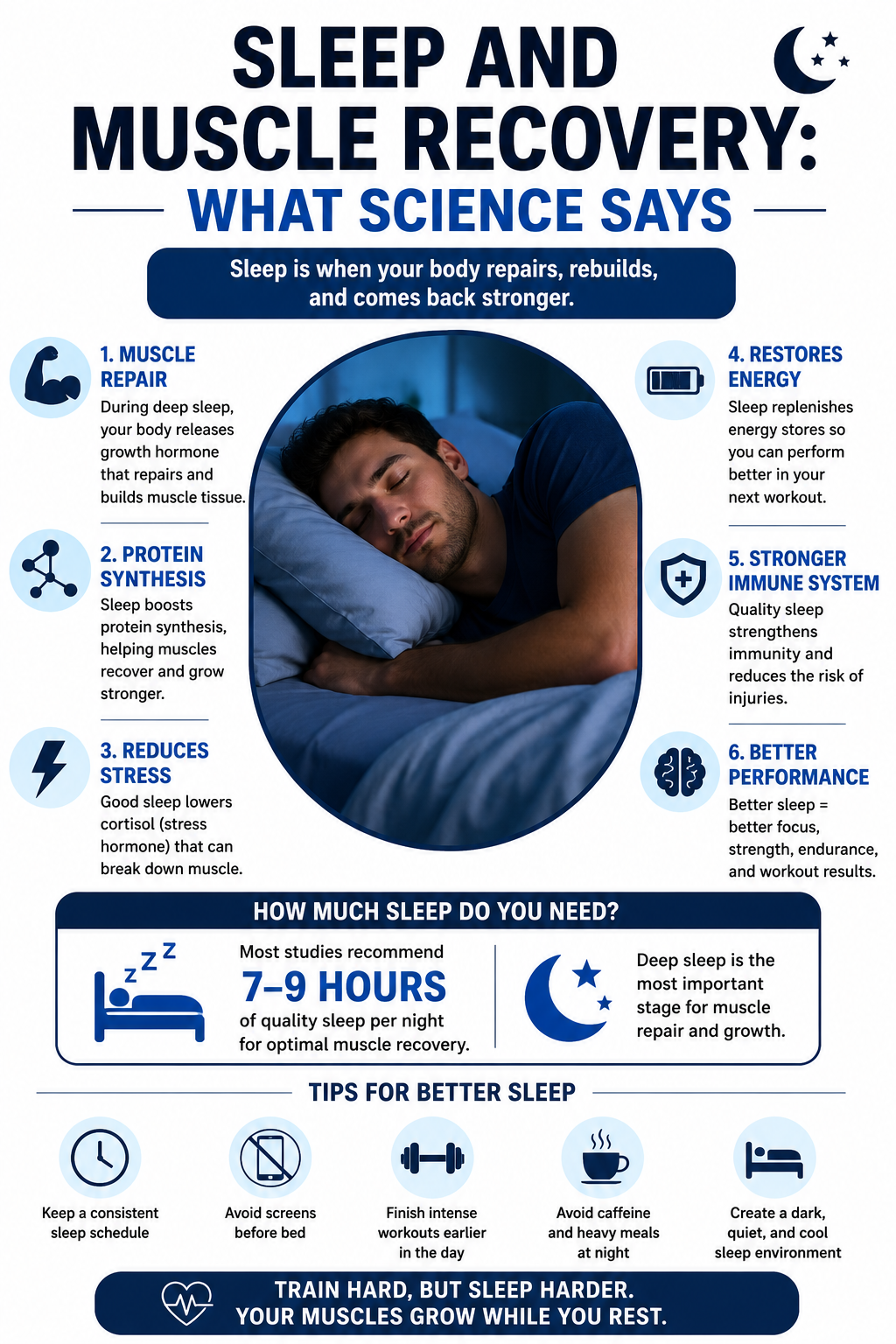
Science has shown that growth hormone is released in larger amounts during deep sleep. This hormone plays a major role in muscle repair and recovery. It also supports healthy bones, strengthens connective tissues, and helps the body recover from intense exercise.
I noticed that after getting seven to nine hours of uninterrupted sleep, I woke up feeling refreshed instead of sore. My muscles recovered faster, and I felt stronger during my next workout.
Sleep Helps Protein Synthesis
Protein synthesis is the process where the body uses protein from food to repair and build muscle tissue.
Even if you eat plenty of protein, your body still needs quality sleep to make the best use of those nutrients. During sleep, your body becomes highly efficient at repairing damaged muscle fibers.
There was a time when I focused only on eating high protein meals. I thought nutrition alone would help me gain muscle. However, my progress remained slow because I was sleeping only five or six hours every night.
After improving my sleep schedule, I noticed that my muscles looked fuller, I recovered faster, and my gym performance improved even though my diet stayed almost the same.
The Role of Growth Hormone
Growth hormone is one of the most important hormones for muscle recovery.
Most of this hormone is released while we are sleeping, particularly during deep sleep. It supports muscle growth, repairs damaged tissues, and helps the body recover from physical stress.
When sleep is poor or too short, the production of growth hormone decreases. This means your body cannot repair muscles as efficiently as it should.
I found this especially noticeable after nights with very little sleep. My workouts felt harder, my muscles remained sore longer, and lifting heavy weights became more difficult.
Testosterone and Muscle Building
Another reason sleep matters is because it supports healthy testosterone levels.
Testosterone is an important hormone for muscle growth in both men and women, although men naturally produce more of it.
Scientific studies have found that sleep deprivation can lower testosterone levels. Even losing a few hours of sleep every night over several days may affect muscle building, strength, and energy.
When I started sleeping earlier, I felt more energetic throughout the day. My motivation to train increased, and I could complete my workouts without feeling mentally exhausted.
Poor Sleep Increases Muscle Soreness
One thing I noticed almost immediately after improving my sleep was that my muscle soreness became much easier to manage.
Before, I often felt pain for three or four days after a hard workout. Walking upstairs felt uncomfortable, and my body always seemed stiff.
Now, after getting proper sleep, soreness usually disappears much faster. Science supports this experience because sleep helps reduce inflammation and speeds up tissue repair.
This means you can return to training sooner while maintaining better performance.
Sleep Improves Strength and Performance
Recovery is not only about repairing muscles. It also involves restoring the nervous system.
Heavy lifting places stress on both muscles and the brain. During sleep, the nervous system recovers, allowing muscles to contract more efficiently during future workouts.
Whenever I slept well before training, I noticed several positive changes.
I lifted heavier weights.
My balance improved.
My reaction time became quicker.
I stayed focused throughout the workout.
I completed more repetitions without feeling mentally tired.
These small improvements added up over time and helped me make consistent progress.
Lack of Sleep Can Slow Muscle Growth
Many people spend hours searching for the perfect workout routine or the best supplements while ignoring sleep.
Science clearly shows that chronic sleep deprivation can reduce muscle protein synthesis, increase muscle breakdown, raise stress hormone levels, and slow recovery.
In simple words, your body becomes less effective at building muscle.
I personally experienced this during a period when work kept me awake until late at night. Although I continued exercising regularly, my progress almost completely stopped. Once I fixed my sleeping schedule, my energy returned and my strength gradually improved again.
Sleep Reduces Stress Hormones
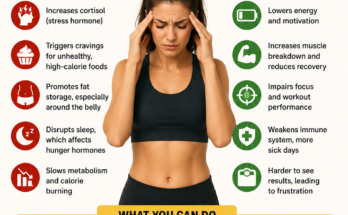
When we do not get enough sleep, the body produces more cortisol.
Cortisol is known as the stress hormone. While it serves many important functions, consistently high cortisol levels can interfere with muscle growth and recovery.
High cortisol may increase muscle breakdown, reduce recovery speed, and leave you feeling tired throughout the day.
Getting enough sleep naturally helps regulate cortisol levels, creating a better environment for muscle repair and growth.
How Much Sleep Is Best
Most experts recommend between seven and nine hours of quality sleep each night for healthy adults.
Athletes or people who perform intense physical activity may even benefit from slightly more sleep during periods of heavy training.
I discovered that around eight hours works best for me. Less than seven hours usually leaves me feeling tired, while eight hours helps me wake up refreshed and ready for the day.
The exact number may vary from person to person, but consistency is just as important as the total hours.
Tips That Improved My Sleep
Improving my sleep did not happen overnight. I made a few simple changes that produced excellent results.
I started going to bed at the same time every night.
I stopped using my phone at least thirty minutes before sleeping.
I kept my bedroom cool, quiet, and dark.
I avoided drinking coffee late in the evening.
I finished heavy meals a couple of hours before bedtime.
I trained regularly because exercise naturally helped me fall asleep faster.
These habits may sound simple, but together they made a noticeable difference in both my sleep quality and muscle recovery.
Common Mistakes People Make
One mistake I often see is people sacrificing sleep to fit in an early workout.
Exercise is important, but regularly sleeping only four or five hours can eventually reduce the benefits of training.
Another mistake is believing that weekends can make up for poor sleep during the week. Although extra weekend sleep feels good, it cannot completely reverse the effects of several nights of sleep deprivation.
Many people also rely heavily on supplements while ignoring basic recovery habits. No supplement can replace consistent, high quality sleep.
The Science Is Clear
Researchers continue to study sleep because it affects nearly every system in the human body.
The evidence consistently shows that quality sleep supports muscle repair, hormone production, immune function, protein synthesis, mental focus, and athletic performance.
People who sleep well generally recover faster, perform better during workouts, and maintain healthier bodies over time.
That does not mean every night has to be perfect. We all experience stressful days or occasional late nights. What matters most is maintaining healthy sleep habits consistently.
Final Thoughts
If there is one lesson I have learned during my fitness journey, it is that muscle growth does not happen only inside the gym. The hours after training are just as important as the workout itself.
For me, improving my sleep became one of the biggest turning points in my progress. My muscles recovered faster, my strength increased, my energy improved, and I actually started enjoying my workouts more. I no longer viewed sleep as wasted time. Instead, I began seeing it as an essential part of my fitness routine.
Science strongly supports this approach. Quality sleep helps your body repair muscle tissue, balance important hormones, reduce inflammation, improve strength, and prepare you for your next workout. If you are already training consistently and eating a balanced diet, improving your sleep may be the easiest way to unlock better results.
Instead of searching for another supplement or another complicated workout plan, start by giving your body the recovery it deserves. Sometimes the strongest muscles are built while you are peacefully asleep.