For the longest time, I believed that cutting out sugar completely and replacing it with artificial sweeteners was the smartest thing I could do for my health. Everywhere I looked, I saw products labeled as sugar free, low calorie, or diet. It seemed like an easy solution. But after paying closer attention to how different foods made me feel and spending time learning about nutrition, I realized the answer is not as simple as choosing one over the other.
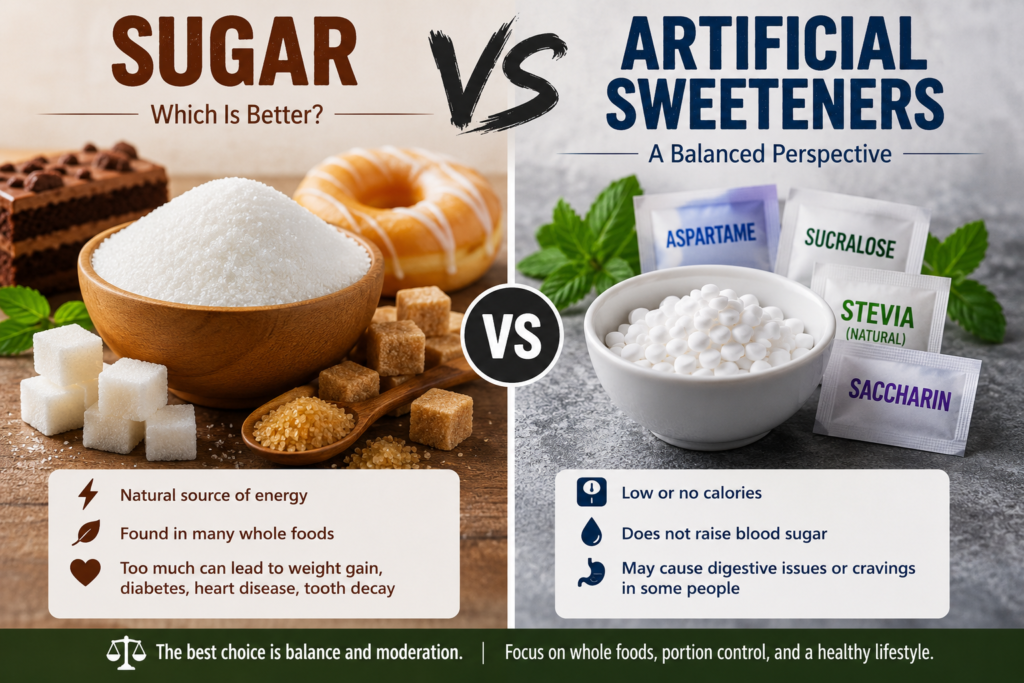
Both sugar and artificial sweeteners have their advantages and disadvantages. The better choice often depends on your health goals, lifestyle, and how much you consume. Over time, I learned that moderation matters much more than following trends. Instead of fearing sugar or relying too much on artificial sweeteners, I found that balance is what truly works.
Understanding What Sugar Really Is
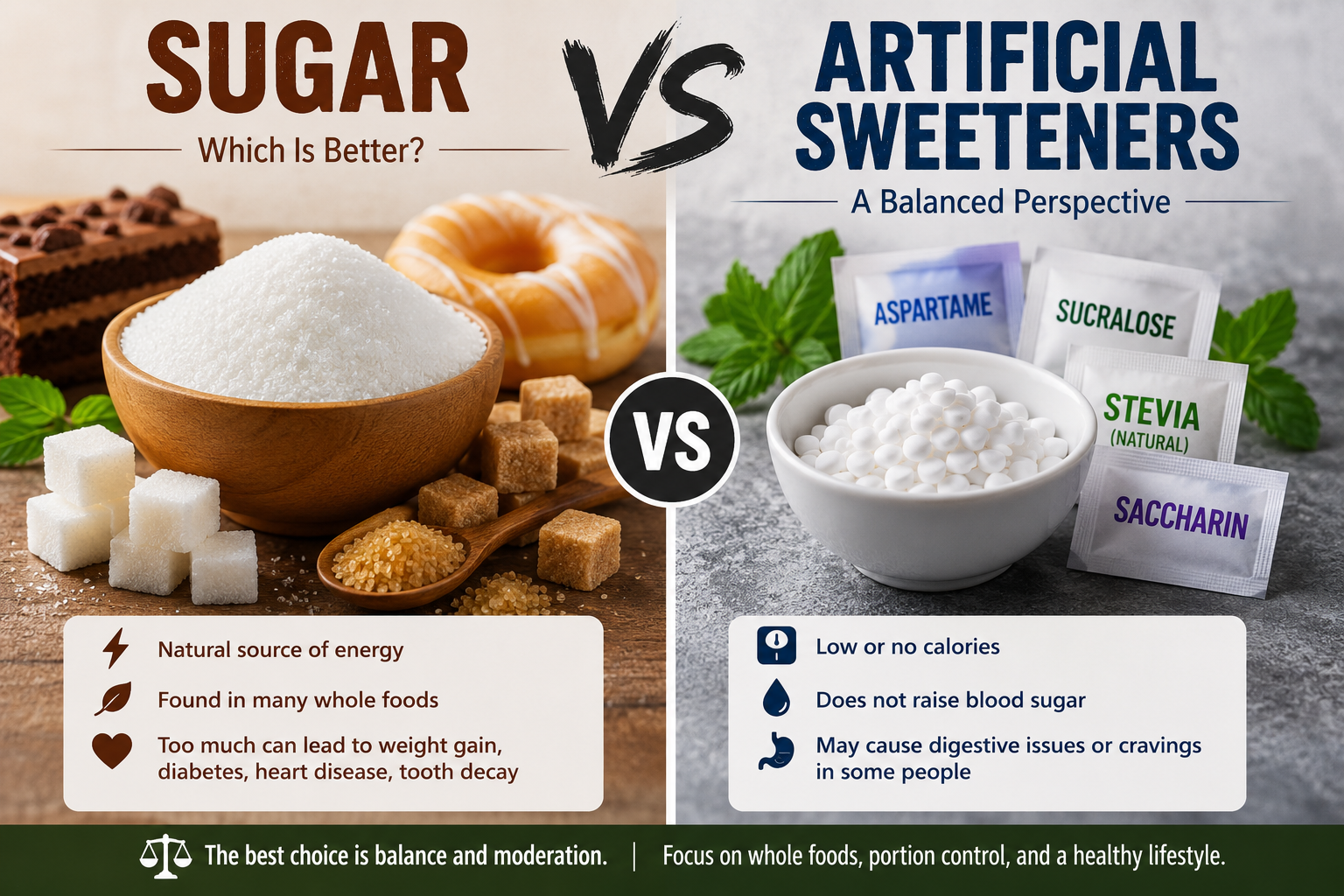
Sugar is a natural carbohydrate that provides energy to the body. It is found naturally in fruits, vegetables, and dairy products. There is also added sugar, which manufacturers include in soft drinks, desserts, candies, cereals, and many processed foods.
Our bodies use sugar as fuel. Glucose is actually the main energy source for our brain and muscles. The problem begins when we eat far more added sugar than our body needs.
I used to drink sweet coffee several times a day and rarely checked food labels. When I started tracking my meals, I realized I was consuming sugar from places I never expected, including sauces, flavored yogurt, and packaged snacks. Those hidden sugars added up quickly.
Why Too Much Sugar Can Be Harmful
Having a little sugar occasionally is not a problem for most healthy people. The real issue is excessive daily intake.
When I regularly ate sugary snacks during work, I noticed a quick burst of energy followed by an afternoon crash. I felt tired, hungry again, and often reached for another sweet treat. It became a cycle that was difficult to break.
Eating too much added sugar may contribute to several health concerns, including weight gain, increased risk of type 2 diabetes, heart disease, fatty liver, and tooth decay. It can also make it harder to maintain stable energy levels throughout the day.
Another thing I noticed was how sugar affected my cravings. The more sweets I ate, the more I wanted them. Reducing my intake for just a few weeks made those cravings much easier to control.
What Are Artificial Sweeteners?
Artificial sweeteners are sugar substitutes that provide sweetness with little or no calories. They are much sweeter than regular sugar, so only tiny amounts are needed.
Some common artificial sweeteners include aspartame, sucralose, saccharin, and acesulfame potassium. There are also natural low calorie sweeteners like stevia and monk fruit that many people prefer.
I first tried artificial sweeteners when I switched from regular soft drinks to diet versions. At first, they tasted different, but after some time I became used to them. They helped reduce my daily calorie intake without giving up sweet flavors completely.
Benefits of Artificial Sweeteners
One of the biggest advantages of artificial sweeteners is calorie reduction. For people trying to lose weight, replacing sugary drinks with sugar free alternatives can lower overall calorie intake.
Another benefit is that artificial sweeteners usually do not raise blood sugar levels the way regular sugar does. This makes some of them useful for people with diabetes when used under medical guidance.
Artificial sweeteners also do not contribute to tooth decay like sugar does. This is one reason they are commonly used in sugar free chewing gum and dental friendly products.
When I was trying to reduce my calorie intake, replacing one sugary drink each day with a sugar free version helped me cut hundreds of calories every week without feeling deprived.
Are Artificial Sweeteners Completely Safe?
This is one of the questions I hear most often. The answer is that approved artificial sweeteners are considered safe by major food safety authorities when consumed within recommended limits.
However, that does not necessarily mean everyone responds to them the same way.
Some people report digestive discomfort after consuming certain sweeteners. Others find that very sweet tasting foods keep their desire for sugary foods alive, making it harder to develop healthier eating habits.
Personally, I realized that relying too much on artificially sweetened drinks kept me craving sweetness throughout the day. Once I started drinking more water and unsweetened beverages, my taste buds slowly adjusted.
Natural Sweeteners Compared to Artificial Ones
Many people assume that natural sweeteners are automatically healthier. While options like honey, maple syrup, coconut sugar, and date syrup contain small amounts of vitamins or minerals, they are still forms of sugar.
I used to think replacing white sugar with honey meant I could use as much as I wanted. Later I learned that honey still contains calories and affects blood sugar, although it may offer slightly more nutrients than refined sugar.
Natural does not always mean calorie free or healthier in large amounts. Portion size still matters.
Which Option Is Better for Weight Loss?
This depends on how each person uses them.
If replacing sugary drinks with low calorie alternatives helps someone reduce overall calories, artificial sweeteners may support weight loss.
However, simply switching to sugar free products without improving the rest of the diet may not lead to lasting results.
When I focused only on replacing sugar, I did not see much difference. Real progress happened when I started eating more vegetables, lean protein, whole grains, and healthy fats while also reducing highly processed foods.
Weight loss is influenced by total calorie intake, physical activity, sleep quality, and consistency over time.
Which Is Better for Blood Sugar?
Regular sugar causes blood glucose levels to rise more quickly than most artificial sweeteners.
For people living with diabetes or insulin resistance, artificial sweeteners can sometimes be a useful tool for reducing sugar intake. Even so, they should not replace a balanced diet filled with nutritious whole foods.
I have seen friends assume that sugar free desserts are completely healthy, only to realize later they were still eating large portions packed with unhealthy fats and refined ingredients.
Blood sugar management is about the entire eating pattern, not just one ingredient.
The Importance of Reading Food Labels
One habit that completely changed the way I shop was reading nutrition labels.
Many products advertised as healthy still contain surprising amounts of added sugar. Others contain multiple artificial sweeteners along with refined ingredients.
Instead of trusting marketing claims, I now look at the ingredient list and nutrition facts. It takes only a few seconds and helps me make better choices.
The fewer highly processed ingredients I see, the more confident I feel about putting that product into my shopping cart.
Can You Train Your Taste Buds?
One thing that surprised me was how quickly my taste preferences changed.
When I gradually reduced sugar in my coffee, I noticed that after a few weeks, drinks I once loved suddenly tasted too sweet.
The same thing happened with desserts. Fresh fruit started tasting sweeter than before, and I no longer felt the need to eat sugary snacks every evening.
Our taste buds can adapt over time. Reducing sweetness little by little often feels much easier than trying to quit all at once.
Practical Tips That Worked for Me
Instead of eliminating every sweet food overnight, I made small changes that were easier to maintain.
I stopped adding extra sugar to tea and coffee.
I replaced sugary drinks with water most days of the week.
I chose whole fruit instead of candy when I wanted something sweet.
I limited desserts to special occasions instead of eating them every day.
I paid closer attention to hidden sugars in packaged foods.
I focused on eating balanced meals with enough protein and fiber because they kept me full longer and reduced cravings naturally.
These simple habits made a much bigger difference than obsessing over whether sugar or artificial sweeteners were perfect.
So Which One Is Better?
After trying both approaches, I believe neither sugar nor artificial sweeteners should become the center of a healthy diet.
If you enjoy a small amount of sugar occasionally while eating mostly whole foods, there is usually no reason to panic. On the other hand, artificial sweeteners can be helpful for reducing calorie intake or managing blood sugar, especially when used wisely and in moderation.
The healthiest approach is to reduce your dependence on very sweet foods altogether. Whether the sweetness comes from sugar or artificial sweeteners, constantly seeking intense sweetness may make it harder to appreciate naturally nutritious foods.
Final Thoughts
If someone asked me today whether sugar or artificial sweeteners are better, I would say the answer depends on your personal health goals and overall eating habits. There is no universal winner.
From my own experience, I found that the biggest improvement came from eating more fresh, minimally processed foods and becoming more aware of how much sweetness I actually needed. I stopped chasing perfect diets and focused on building habits I could maintain every day.
In the end, good nutrition is not about choosing one ingredient over another. It is about creating a balanced lifestyle where treats can still fit, healthy foods make up most of your meals, and every choice supports your long term well being. That mindset has been far more valuable than any sugar substitute I have ever tried.