Introduction
When I first heard about intermittent fasting, I honestly thought it was just another health trend that would disappear after a few months. Every year there seems to be a new diet promising quick weight loss and better health, so I did not pay much attention. But in 2026, intermittent fasting is still one of the most talked about eating patterns in the world. That made me curious enough to give it a try for myself.
I was not looking for a miracle. I simply wanted to feel healthier, improve my energy, and have a better relationship with food. After following intermittent fasting for several months, reading about the latest research, and learning from my own experience, I realized that the truth is much more interesting than the social media posts make it seem.
In this article, I want to share what I have learned, what surprised me the most, and why intermittent fasting may or may not be the right choice depending on your lifestyle.
What Intermittent Fasting Really Means
The first thing I misunderstood was the meaning of intermittent fasting. I thought it was about eating very little food, but that is not true.
Intermittent fasting is more about when you eat than what you eat. Instead of constantly snacking throughout the day, you eat your meals within a specific time window and spend the remaining hours fasting.
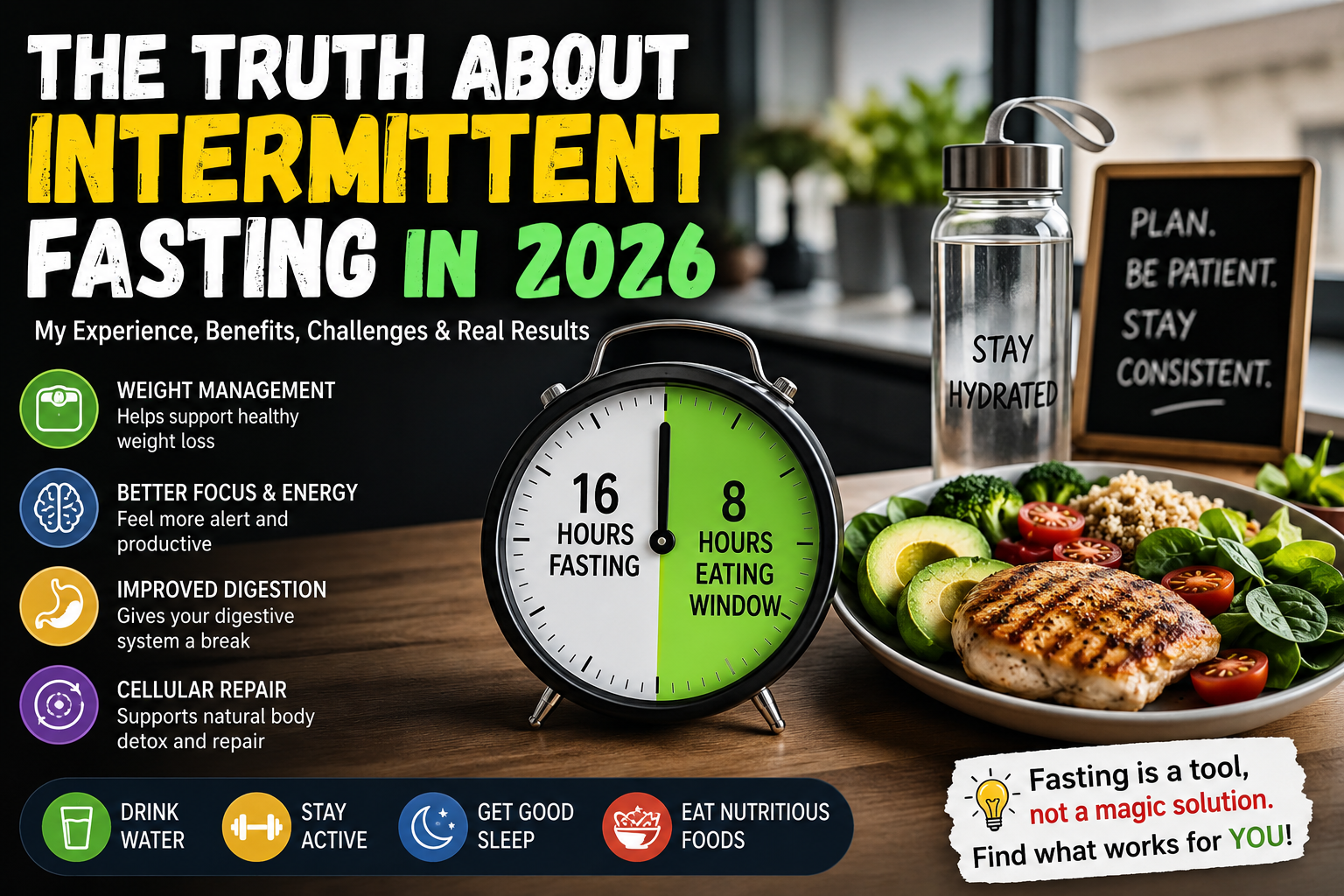
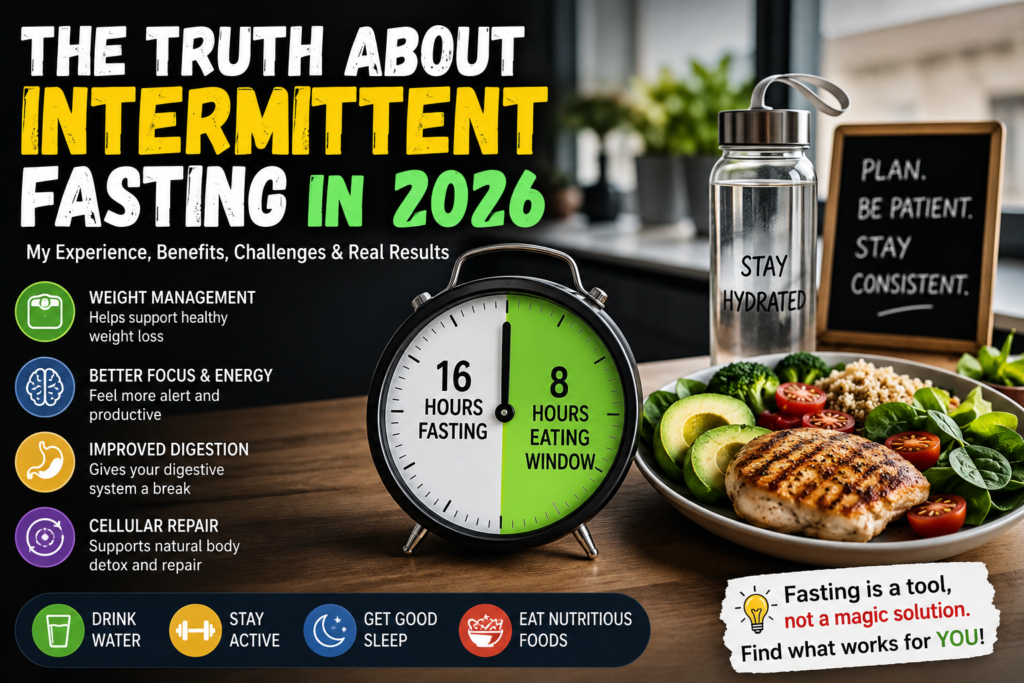
The most common schedule I followed was the sixteen and eight method. I fasted for sixteen hours and ate all my meals during an eight hour period. At first, this sounded difficult, but after a couple of weeks, it became surprisingly natural.
I quickly realized that fasting does not give you permission to eat unhealthy food. Your food choices still matter. Fresh vegetables, fruits, lean protein, healthy fats, and whole grains remained the foundation of my meals.
My First Few Weeks
The first week was definitely the hardest.
My body was used to breakfast early in the morning, so skipping it felt strange. Around ten in the morning I often felt hungry and kept checking the clock. I even wondered if I should stop because I thought it was not working for me.
Instead of quitting, I stayed hydrated by drinking plenty of water, black coffee, and unsweetened tea. After several days, something interesting happened. My hunger became easier to control, and I stopped thinking about food every hour.
By the end of the second week, fasting had become part of my daily routine. I noticed that I had more focus while working because I was not constantly planning my next snack.
The Biggest Benefits I Experienced
One of the first changes I noticed was better control over my eating habits.
Before intermittent fasting, I often ate simply because I was bored. During fasting, I became more aware of real hunger versus emotional cravings. That alone helped me make smarter decisions.
Another benefit was steady energy throughout the day. I expected to feel tired without breakfast, but surprisingly, I felt more alert during the morning hours.
My digestion also seemed to improve. Since I was eating fewer times during the day, I did not experience the heavy feeling that sometimes followed frequent meals.
Perhaps the most encouraging result was gradual weight loss. It did not happen overnight, but over several months I noticed that my clothes fit better, and maintaining a healthy calorie intake became easier without feeling restricted.
What Science Says in 2026
By 2026, researchers have continued studying intermittent fasting in greater detail. The latest evidence suggests that fasting can support weight management, improve insulin sensitivity, and help some people regulate blood sugar levels.
Scientists are also exploring how fasting may support cellular repair processes that naturally occur while the body is not digesting food. Although research is still ongoing, many experts believe these processes could contribute to long term health.
However, researchers also agree on something very important. Intermittent fasting is not magic. The quality of your diet, regular physical activity, sleep, and stress management all remain essential for good health.
No eating schedule can completely replace healthy lifestyle habits.
Common Myths That I Believed
Before trying intermittent fasting, I believed several myths that turned out to be completely wrong.
The first myth was that fasting automatically burns fat all day long. While fasting can help with fat loss, eating too many calories during the eating window can still prevent weight loss.
The second myth was that everyone should skip breakfast. I learned that different people have different schedules and nutritional needs. Some people genuinely feel better eating breakfast, while others perform well without it.
Another myth was that fasting causes muscle loss. In reality, eating enough protein and doing resistance training helped me maintain my muscle while losing body fat.
The final myth was that longer fasting is always better. I discovered that extremely long fasting periods are not necessary for most healthy adults and may actually make the routine harder to maintain.
Challenges That Nobody Talks About
Although intermittent fasting worked well for me, it was not perfect.
Social events sometimes became difficult. Friends would invite me for breakfast, or family dinners would start later than my eating window allowed. I learned that flexibility is important.
Traveling also disrupted my schedule. Different time zones and busy days made it impossible to follow the exact same routine every day.
Another challenge was eating enough nutrients. Since I had fewer meals, I needed to make every meal count. I focused on balanced plates filled with protein, vegetables, healthy fats, and fiber.
Most importantly, I learned not to become obsessed with the clock. Missing one fasting day did not ruin my progress.
Who Should Be Careful
One lesson I learned is that intermittent fasting is not suitable for everyone.
Pregnant women, breastfeeding mothers, children, teenagers who are still growing, and people with certain medical conditions should always consult a healthcare professional before trying fasting.
People with a history of eating disorders should also approach fasting very carefully because structured fasting may not be appropriate for their recovery.
Health should always come before following any popular trend.
Tips That Helped Me Stay Consistent
If someone asked me how to start intermittent fasting, I would always recommend beginning slowly.
Instead of jumping into a long fasting window, I would suggest extending the overnight fast little by little until the body adjusts naturally.
Drinking enough water made a huge difference. Many times I thought I was hungry when I was actually dehydrated.
Planning meals ahead of time also prevented poor food choices. When healthy food was already prepared, I was much less likely to reach for processed snacks.
Getting enough sleep turned out to be another secret. Whenever I slept poorly, fasting felt much more difficult the next day because my cravings increased.
Finally, I learned to listen to my body instead of forcing myself to follow strict rules.
Is Intermittent Fasting Worth Trying in 2026
After months of personal experience, I believe intermittent fasting can be an excellent tool for many people, but it is exactly that, a tool.
It is not a miracle solution, and it is not the only path to good health. Success depends on consistency, healthy eating, regular exercise, proper hydration, and realistic expectations.
For me, intermittent fasting simplified my daily routine. I stopped worrying about constant snacking, became more mindful about my meals, and found an eating pattern that fit naturally into my lifestyle.
That does not mean everyone will have the same experience. Some people may feel fantastic with fasting, while others may prefer eating several balanced meals throughout the day.
The most important thing is choosing an approach that you can enjoy for years rather than weeks.
Final Thoughts
Looking back, I am glad I gave intermittent fasting a fair chance instead of judging it based on internet opinions. It taught me that healthy living is not about chasing quick fixes. It is about building habits that fit your life and help you feel your best every single day.
The truth about intermittent fasting in 2026 is simple. It can support weight management, improve eating habits, and help many people feel healthier when done correctly. At the same time, it is not a replacement for nutritious food, regular exercise, quality sleep, and a balanced lifestyle.
My journey showed me that consistency always beats perfection. Small daily improvements eventually lead to meaningful long term results. If you decide to try intermittent fasting, start slowly, stay patient, and focus on creating healthy habits that you can maintain for the long run.